
REVIEW · KYOTO BIKE TOURS
Kyoto: Fushimi Inari Shrine and Tofukuji Temple E-Bike Tour
Kyoto rewards a slower ride. This four-hour e-bike outing links famous sights with quiet lanes, local neighborhoods, and a riverside finish, giving you more context than a quick shrine stop. I especially like the small group of up to eight and the chance to see ordinary Kyoto between major attractions. The main consideration is that you need to feel comfortable cycling, walking, and sharing the road in some busy areas.
I also like the way the tour balances Fushimi Inari Shrine with Tofukuji Temple. One is lively and instantly recognizable, while the other offers time for stillness in a Zen garden. The route includes an orientation, a snack, water, entrance fees, and an English-speaking local guide, but you should not expect a long, unhurried visit at every site.
Key points at a glance
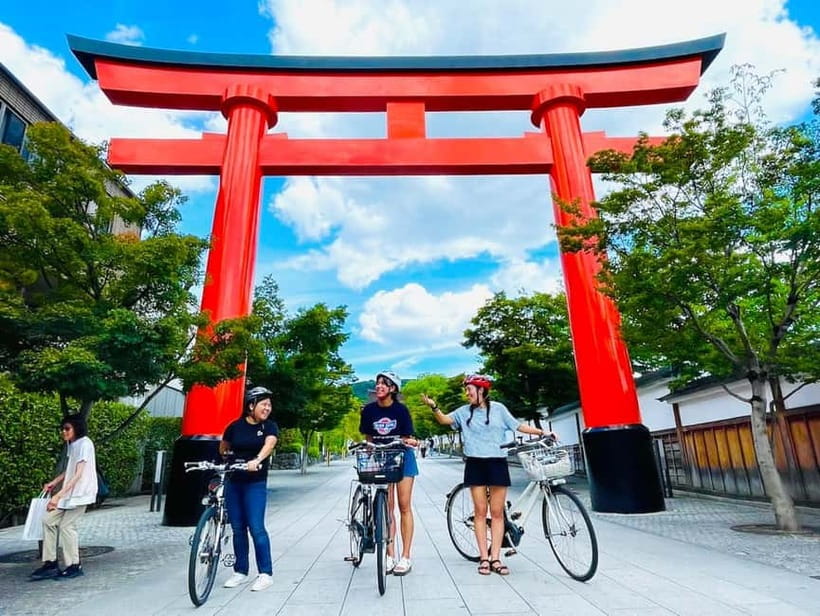
- Four hours by electric bicycle: A practical half-day route for seeing several Kyoto areas without committing to an all-day temple tour.
- A local guide named Maki: Her humor, personal stories, clear English, and care with road safety are central to the experience.
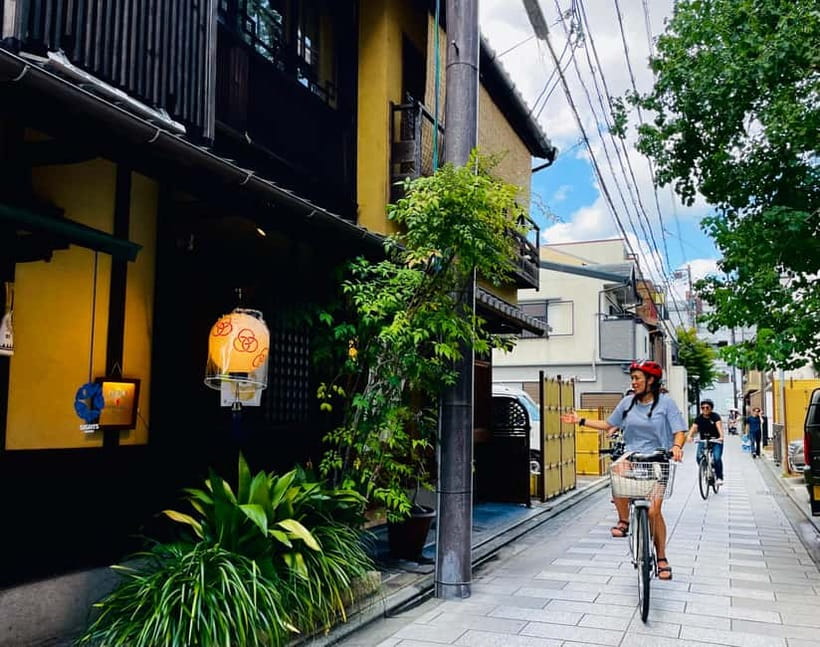
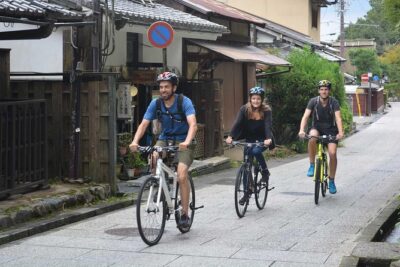
- Gion and residential Kyoto: You ride through geisha districts, side streets, riverside paths, and areas where daily life takes center stage.
- Fushimi Inari and Tofukuji together: The tour pairs Shinto worship at the famous torii gates with Buddhist calm in a Zen garden.
- Easy riding with regular stops: The e-bikes help on steeper stretches, while the route includes breaks for photos, explanations, drinks, and questions.
Why an e-bike is a smart way to see Kyoto
Kyoto’s sights are spread across a broad city, and moving between them can eat up time. Buses may be crowded, taxis cost more, and walking from one major site to another can leave you tired before lunch. An electric bicycle gives you a middle ground: active enough to feel connected to the city, but assisted enough to keep the hills and longer stretches manageable.
The tour begins at Pedal Adventure Kyoto, near Higashiyama-Sanjo, with a basic lesson on riding in Japan. You learn how the e-bike works and receive guidance on using the roads. That briefing matters, especially if you are nervous about cycling outside your home country.
The bikes are described as clean, sturdy, and well maintained. Several people specifically appreciated how easy they were to use, including riders who worried they might struggle to keep up. The electric assistance is most useful on steeper sections and later in the ride, when your legs may be less enthusiastic than they were at the start.
You should still be comfortable on a bicycle. This is not a sightseeing bus with a short walk at each stop. Expect a mix of riding and walking, along with time standing at shrines and temples. The route uses quiet streets where possible, but some main roads and busy areas are unavoidable.
More E-Bike Tours in Japan
- Hidden Kyoto E-Biking tour
★ 5.0 · 1,843 reviews - 5 Top Highlights of Kyoto Full Day Bike Tour (E-bike option)
★ 5.0 · 511 reviews - Kyoto: Memory Kyoto E-Bike Tour
★ 4.8 · 297 reviews
Riding through Gion and everyday Kyoto
The first major part of the route takes you through Gion, Kyoto’s best-known traditional district. Your guide explains geisha culture, local customs, and the difference between seeing a historic quarter and understanding how it functions.
Gion is more than wooden buildings and pretty lanes. It is also a place where good manners matter. A strong guide helps you understand why you should keep your voice down, avoid blocking narrow streets, and treat working neighborhoods as places where people live and work, not as a stage set.
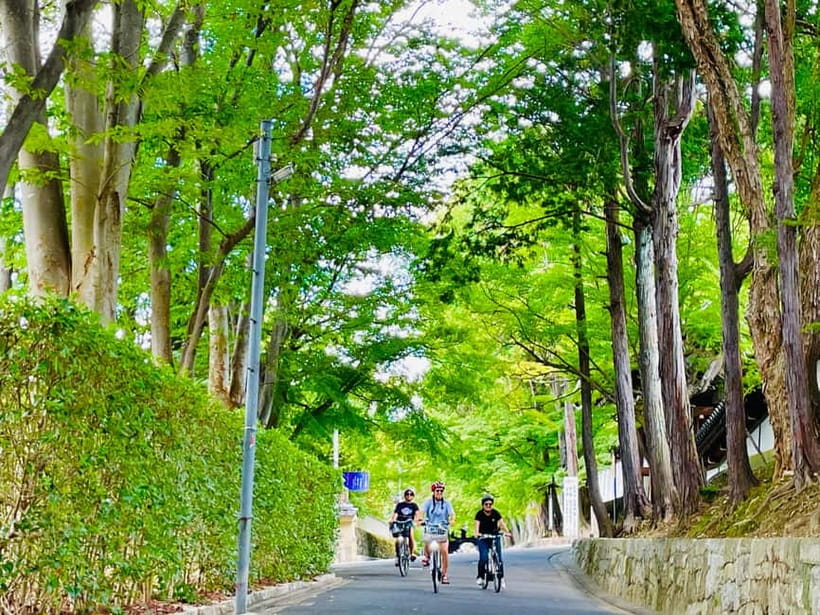
From there, the ride moves into quieter parts of Kyoto. This is one of the tour’s best features because you see small streets, waterways, residential areas, and routes that are easy to miss when you follow a standard sightseeing plan. The pace includes frequent stops, so you are not expected to pedal continuously while trying to absorb a lecture.
Maki receives especially strong praise for making these stops useful and entertaining. She uses stories, personal experiences, historical details, and sometimes a binder with pictures to explain what you are seeing. Her style appears lively and informal, which suits a bicycle tour better than a long formal speech.
She also takes photos for the group, an appealing extra if you are traveling with family or as a couple. One practical point: the guide speaks when the group is stopped, not while everyone is riding. If you want to hear every detail, move in close once the bikes are parked. One rider suggested that a microphone and earpiece could help, though this is a minor issue rather than a major flaw.
Fushimi Inari Shrine and the meaning of Shinto
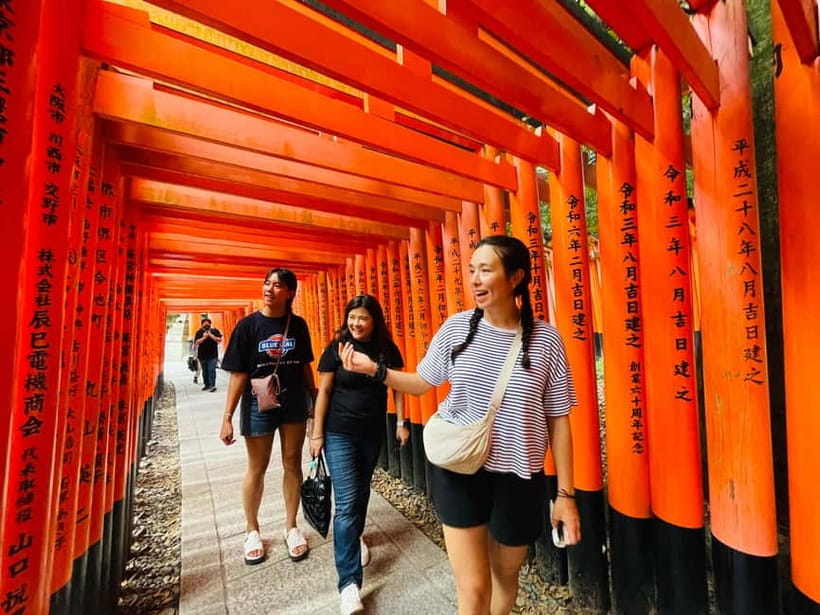
Fushimi Inari is the tour’s headline stop, and for good reason. Its rows of bright torii gates make it one of Kyoto’s most recognizable places. The shrine is dedicated to Inari, a Shinto deity associated with rice, prosperity, and business success, though the tour information focuses more broadly on the shrine’s history and Shinto customs.
The guide explains how Shinto differs from Buddhism and helps you understand the rituals you see. That context can change the way you approach the shrine. Instead of treating the torii as a photo backdrop, you begin to recognize the gestures, offerings, and quiet respect that shape a visit.
Fushimi Inari can be busy, so your time there may feel shorter than you would like. One person specifically wished for more time at the shrine, noting that early delays caused by different cycling speeds reduced the time available. That is a fair limitation of a group outing.
The trade-off is that you do not spend seven or eight hours moving from temple to temple. This tour gives you a focused introduction, then carries you onward to other parts of the city. If Fushimi Inari is your main priority, plan to return on your own at another time. If you want a broader view of Kyoto, the limited stop fits the half-day format well.
Tofukuji Temple and a pause in the Zen garden
Tofukuji Temple provides a useful change of mood. After the movement of the city and the visual intensity of Fushimi Inari, the temple offers a place to slow down and sit with what you have seen.
The tour includes entry to two places, and Tofukuji is where you can relax in a Zen garden. The guide allows a period of reflection rather than filling every minute with facts. I value that choice. Kyoto is easier to appreciate when a tour gives you quiet time instead of rushing you from one explanation to the next.
Your guide also explains Buddhist ideas and contrasts them with Shinto practice. You do not need prior knowledge of Japanese religion to follow along. The explanations are designed to help you make sense of the symbols, buildings, customs, and rituals encountered during the ride.
The garden visit is not a substitute for a full temple tour. Time is shared with the rest of the group, and the schedule must keep moving. Still, the combination of commentary and silence gives the itinerary a good rhythm: ride, listen, look, pause, and ride again.
More Historic Bike Tours in Japan
- Historical Kyoto E-Bike Tour
★ 5.0 · 181 reviews - 4.5-hr Kyoto Historical Highlights Bike Tour with UNESCO
★ 4.7 · 13 reviews - 5-Hour Osaka Bike Tour to the Neighborhood of Osaka Castle
★ 5.0 · 319 reviews - Half-day Himeji Castle Town Bike Tour with Lunch
★ 5.0 · 81 reviews
The route, pace, and road safety
The route is designed for sightseeing rather than speed. You stop at several shrines and temples, take photos, hear short explanations, and ride through different parts of Kyoto. The return leg follows the river, which many people found to be a particularly pleasant way to finish.
That final riverside section also makes practical sense. After several hours on a bicycle, a quieter and more scenic route is welcome. It gives you a chance to enjoy the city without another demanding sightseeing stop.
Road safety depends partly on your own confidence, but the guide’s leadership matters. Maki explains how to ride in the area, chooses side streets when possible, and gives directions through busier sections. People who were initially uneasy about cycling on Japanese roads generally felt safe with her guidance.
The group size is limited to eight. That is small enough for questions and personal attention, though different cycling speeds can affect the schedule. Families with teenagers fit the format well, and several families found the ride easy and enjoyable. Children under 12 are not accepted, and the experience is not suitable for pregnant women or people with mobility impairments.
Wear comfortable clothing and shoes. Sunscreen is sensible on sunny days, and a camera is worth bringing for the views and family photos. Water is provided, along with a snack, but you should still arrive ready to stay hydrated.
How Maki shapes the experience
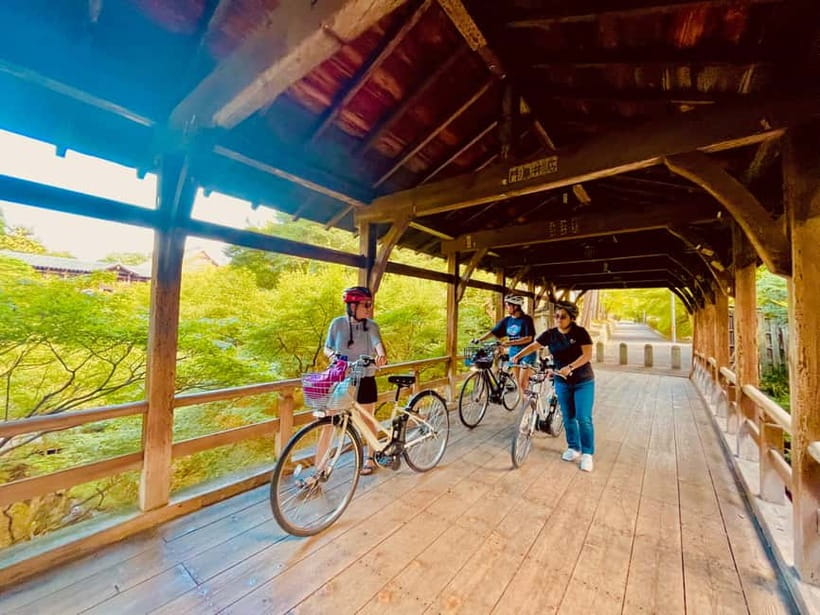
A route can be excellent and still feel flat with the wrong guide. Here, Maki appears to be the heart of the tour. Her approach combines humor, local insight, personal stories, and careful attention to the group.
She explains Japanese history, religion, customs, infrastructure, samurai stories, and geisha culture without making the ride feel like a classroom. Her English is praised as clear, and she welcomes questions throughout the outing. That is important in Kyoto, where small details can be confusing without context.
Maki also seems attentive to different ages and abilities. She explains the e-bike before departure, watches the group on the road, offers drink breaks, and interacts easily with teenagers. If you are traveling with younger family members who might lose interest during a long temple visit, the cycling keeps the day active.
Her sense of humor is another recurring strength. That may sound minor, but four hours of information can become tiring if the tone is too formal. Maki’s jokes and energy help the day feel social rather than instructional.
The one caution is that the tour’s quality is closely tied to the guide assigned that day. The supplied details identify Maki and describe her leading many outings, but availability can vary. If a specific guide matters to you, check the booking details before you reserve.
Is the $83 price good value?
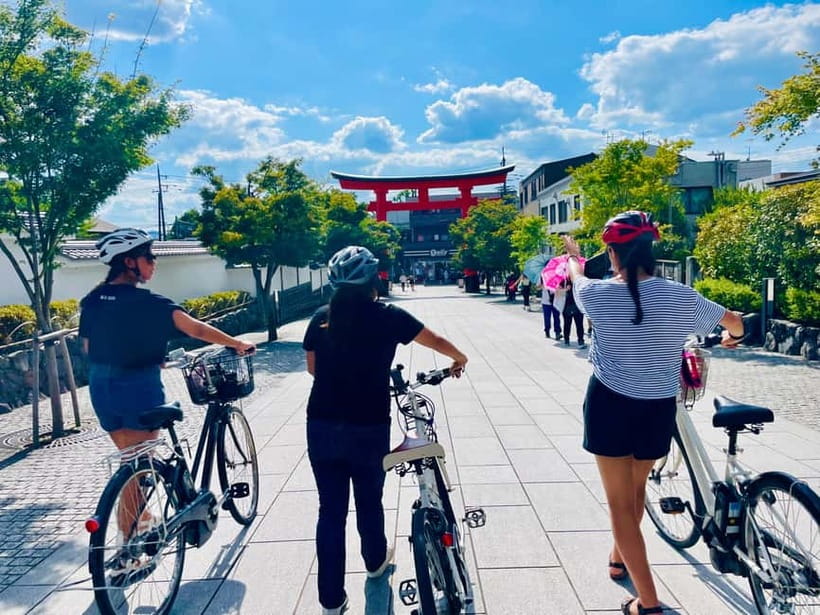
At $83 per person, the tour is not the cheapest way to reach Fushimi Inari. You could use public transport and visit a shrine independently for much less. The price becomes easier to justify when you count the e-bike, helmet, insurance, guide, snack, water bottle, and entry fees for two places.
The larger value is time and interpretation. You are not simply being delivered to Fushimi Inari. You are shown how Gion connects to the wider city, introduced to local customs, taken through residential areas, and given an explanation of Shinto and Buddhism.
I would also compare the price with the cost of booking several separate activities. A guided cultural walk, bicycle rental, temple entrances, and local transport could add up quickly, while this outing covers the main pieces in one half-day plan.
It is particularly good value if you want an orientation at the beginning of your stay. You learn what you are looking at, receive local suggestions, and gain a better sense of Kyoto’s layout. It is less useful if you prefer to spend a full day at one shrine or temple, or if cycling is not something you enjoy.
Who should book this Kyoto bike tour?
I would recommend it to couples, families with teenagers, and active adults who want a broad introduction to Kyoto. It suits you if you like learning from a local guide but do not want to sit through a long, formal walking lecture.
It is also a strong choice for anyone who finds Kyoto’s public transport system intimidating. The bike gives you a clear route and lets you cover more ground without constant transfers.
You should think twice if you need lots of unstructured time at Fushimi Inari, dislike riding near traffic, or cannot comfortably manage a mix of cycling and walking. The tour is not designed for very young children, pregnant participants, or people with mobility limitations.
Book with realistic expectations. You will see several places, but you will not have unlimited time at each one. The reward is variety: Gion, quieter neighborhoods, shrines, temples, a Zen garden, and a river route, all tied together by a guide who explains why each place matters.
Should you book the Fushimi Inari e-bike tour?
Yes, if you want a lively half-day introduction to Kyoto rather than a single-site visit. The strongest reasons to book are the easy e-bikes, small group, thoughtful route, and Maki’s engaging way of explaining Japanese culture.
I would not choose it as your only visit to Fushimi Inari if that shrine is your top priority. Instead, treat this tour as a well-paced introduction to Kyoto, then return independently if you want more time among the torii gates.
At $83, the tour is a fair buy for the equipment, admissions, guidance, and access to quieter parts of the city. Pack comfortable clothes, arrive ready to ride, and leave room in your schedule for the possibility that the city’s temples and stories will send you back out exploring on your own.
FAQ
How long is the Kyoto e-bike tour?
The tour lasts four hours and includes both cycling and walking.
Where does the tour meet?
The meeting point is Pedal Adventure Kyoto, near Higashiyama-Sanjo.
What is included in the price?
The price includes an English-speaking local guide, electric bicycle rental, helmet, insurance, a snack, a water bottle, and entrance fees for two places.
Does the tour visit Fushimi Inari Shrine and Tofukuji Temple?
Yes. The route visits Fushimi Inari Shrine and Tofukuji Temple, including time in a Zen garden.
Is the tour suitable for children?
Children under 12 are not permitted. Families with teenagers can take part, provided everyone is comfortable cycling and walking.
What should I bring?
Bring comfortable shoes, comfortable cycling clothes, sunscreen, and a camera. You should also be prepared for a mix of riding and walking.
More Historic Bike Tours in Kyoto
- Historical Singapore Bike Tour on Full-Sized Bicycles
★ 5.0 · 1,421 reviews - Barcelona: 2.5-Hour Bike or E-Bike Historical Tour
★ 4.5 · 1,262 reviews - Asheville Historic Downtown Guided Electric Bike Tour with Scenic Views
★ 5.0 · 1,234 reviews - Krakow: Bike Tour of Old Town, Jewish Quarter and the Ghetto
★ 4.9 · 1,155 reviews
More E-Bike Tours in Kyoto
- E-Bike Tours of the highlights of Kyoto!!!
★ 5.0 · 291 reviews - Kyoto: City Secrets eBike Tour
★ 4.9 · 196 reviews - Kyoto: Hidden Gems E-Bike Tour with Local Japanese Guide
★ 4.9 · 189 reviews - Arashiyama Bamboo Forest E-Biking Tour
★ 5.0 · 183 reviews
Newly added rides around Kyoto
- Kyoto: City Secrets eBike Tour★ 4.9 · 196 reviews
- Best of Kyoto: Ginkakuji & Path of Philosophy E-Bike Tour★ 4.9 · 79 reviews
- Kyoto: Tailored E-Bike Tour to Highlights & Hidden Gems★ 4.9 · 32 reviews
- Kyoto: Hidden Gems E-Bike Tour with Local Japanese Guide★ 4.9 · 189 reviews
- Kyoto: Half-day Guided Bike Tour with Fushimi Inari★ 4.9 · 21 reviews
- Kyoto: Hidden Gems E-Bike Tour Through Backstreets & Temples★ 4.9 · 54 reviews
- Kyoto: Early Bird E-Bike Tour with Lunch★ 5.0 · 14 reviews
- Kyoto: Full-Day City Highlights Bike Tour with Light Lunch★ 5.0 · 52 reviews
Kyoto Bike Tours, compared.
Arashiyama Bamboo Forest & Hidden Gems Bike Tour (Early Bird)
Read our review →
5 Top Highlights of Kyoto Full Day Bike Tour (E-bike option)
Read our review →
Full Day Biking Tour Exploring the Best of Kyoto
Read our review →

Afternoon Kyoto Bike Tour: Bamboo Forest, Monkeys & Hidden Spots
Read our review →Browse the lists this tour appears in