
REVIEW · KYOTO BIKE TOURS
E-Bike Tours of the highlights of Kyoto!!!
Kyoto opens up beautifully from a bicycle seat. This guided e-bike tour gives you a close look at famous temples, quiet canals, old neighborhoods, and back roads that are easy to miss on foot or from a taxi. I especially like the small-group format and the chance to ride through ordinary Kyoto between major sights, not just hop from one landmark to another.
I also like that the route includes time to walk through temple grounds and gardens, so this is not a nonstop cycling workout. Guides such as Philippe, Kevin, and Niall have been praised for clear explanations, local insight, and flexible routing. The main point to consider is physical effort: the ride can last about five and a half hours, and some riders found the day more demanding than expected.
Key points to know before booking
- Two different Kyoto routes: Choose the East Side or West Side course, since the listed sights are divided between them.
- E-bikes are included: The electric assistance helps on a long day of riding, especially if you are unsure about your cycling fitness.
- Quiet streets are part of the appeal: Guides use back roads, riverside paths, and neighborhood lanes to reduce time on busy main roads.
- Temple visits are not rushed: Stops can include about 30 to 60 minutes for gardens, history, photos, and walking.
- Lunch is not included: Some groups have bought prepared food locally and enjoyed a picnic, but you pay for your own meal.
- The price reflects a full half-day: At $109.43 per person, you are paying for the bike, guide, admissions, and a well-planned route rather than simple bicycle hire.
What kind of Kyoto day is this?
This is a sightseeing tour with cycling between stops, not a race across Kyoto. You ride in manageable sections, park the bikes, and spend time walking through shrines, temples, gardens, and historic districts. That rhythm is important. It lets you see more than you could comfortably cover on foot, while still giving each major stop some breathing room.
The electric bicycle makes the distance more approachable. You still pedal and need to pay attention to traffic, pedestrians, turns, and other cyclists, but the motor takes some strain out of the ride. Several riders found the bikes comfortable and easy to handle. One unhappy experience raised concerns about bicycle quality and crowded streets, so you should still inspect your bike before setting off and tell the guide if anything feels wrong.
The group size is intended to stay small. The description refers to groups of no more than six, while the additional details give a maximum of eight. That is still far more personal than a large coach outing, but the exact size can vary. A smaller group makes it easier to ask questions, stop for photos, and move through narrow lanes.
The route also changes according to the course you select. The East Side includes Heian Shrine, Ginkakuji, and the Philosopher’s Walk. The West Side includes Kinkakuji, Arashiyama Bamboo Forest, and Ryoan-ji. Since the two courses are not the same, check the selected option carefully before booking.
More City Bike Tours in Japan
- 5 Top Highlights of Kyoto Full Day Bike Tour (E-bike option)
★ 5.0 · 511 reviews - Kyoto: Full-Day City Highlights Bike Tour with Light Lunch
★ 5.0 · 52 reviews - Kyoto: Tailored E-Bike Tour to Highlights & Hidden Gems
★ 4.9 · 32 reviews
Riding Kyoto’s back streets, rivers, and old neighborhoods
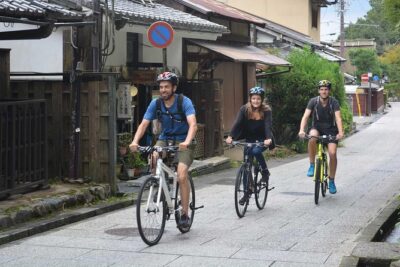
The best part of this experience may be the movement between the headline sights. Kyoto is famous for its temples, but the city becomes more personal when you pass traditional houses, small shops, geisha districts, local streets, and canals at bicycle speed.
Guides have taken groups along the Kamo River and through parts of Gion, using quieter lanes when traffic or festival closures make the main route less practical. This gives you a useful view of daily life. You see the homes and businesses around the monuments, not just the polished entrance gates.
The route is planned with safety and comfort in mind, but you still need moderate physical fitness. Most of the cycling is described as flat, which is good news for many riders. You may still feel tired after several hours, especially in warm weather or if you are not used to riding in a city.
E-bikes help, but they do not remove every challenge. You need to control the bike, watch the road, and stay with the group. One account described the tour as a lot of biking and noted concern about crowded streets. That is worth taking seriously if you are a nervous cyclist or rarely ride.
East Side course: Heian Shrine and its quiet garden
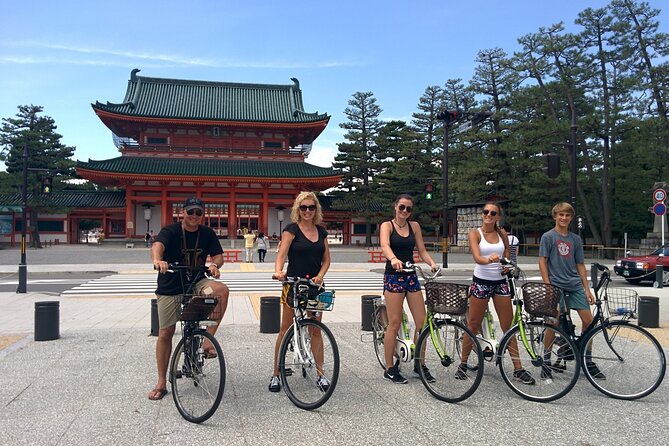
Heian Shrine is a strong opening stop because its scale and design make an immediate impression. It was built as a recreation of Kyoto’s former imperial capital, giving you a visual connection to the city’s role as Japan’s historic center.
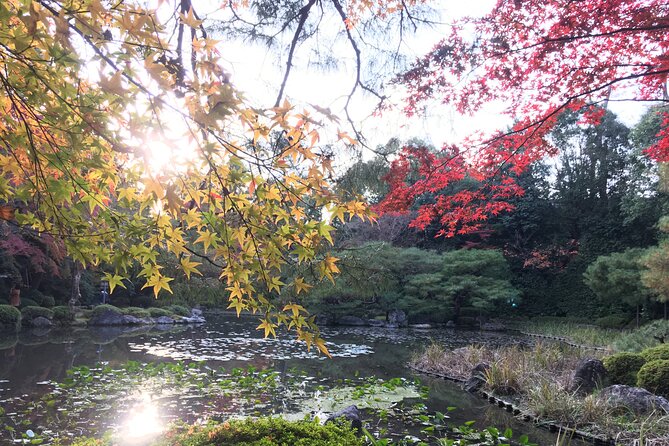
The tour includes the shrine’s garden, which has three large ponds and plenty of greenery. This is more than a quick look at the front gate. You get time to walk, take photos, and sit quietly in a setting that feels calmer than the broad approach to the shrine.
The garden admission is included. That matters because the garden is one of the more memorable parts of the stop, and you do not have to decide on the spot whether to pay an extra fee. Guides have been especially appreciated here for explaining Japanese religious customs, design, and the difference between shrine and temple practices.
Allow about an hour for this stop. The timing gives you a chance to listen and explore rather than hurry through for a single photograph.
Ginkakuji and the art of Japanese garden design
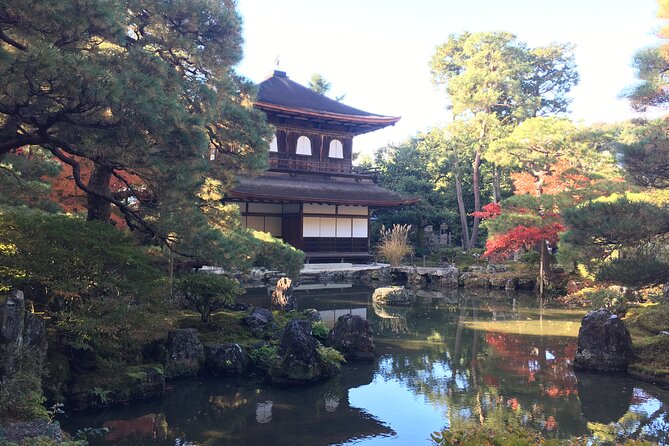
Ginkakuji, often called the Silver Pavilion, is the East Side course’s major temple stop. The building itself is not silver, but the grounds are prized for their carefully arranged gardens, moss, paths, and composed views.
This is a place where a guide adds real value. Without context, you might simply admire the shapes and textures. With an explanation of the garden’s design and the site’s place in Kyoto’s cultural life, you can better understand why the setting feels so deliberate.
The stop lasts about an hour and admission is included. You will walk around the grounds, so wear comfortable shoes and expect a change of pace from cycling. The temple can attract crowds, but the guide may adjust the route and timing when conditions allow.
If you want to see Kyoto’s gardens but do not want to spend an entire day moving between them by bus, this is a useful arrangement. You get the garden experience, then return to the bicycle and continue through the city.
More E-Bike Tours in Japan
- Hidden Kyoto E-Biking tour
★ 5.0 · 1,843 reviews - Kyoto: Memory Kyoto E-Bike Tour
★ 4.8 · 297 reviews - Kyoto: City Secrets eBike Tour
★ 4.9 · 196 reviews - Kyoto: Hidden Gems E-Bike Tour with Local Japanese Guide
★ 4.9 · 189 reviews
The Philosopher’s Walk by canal
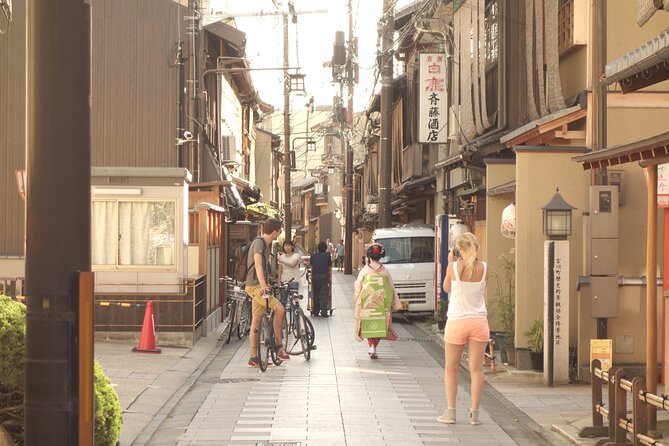
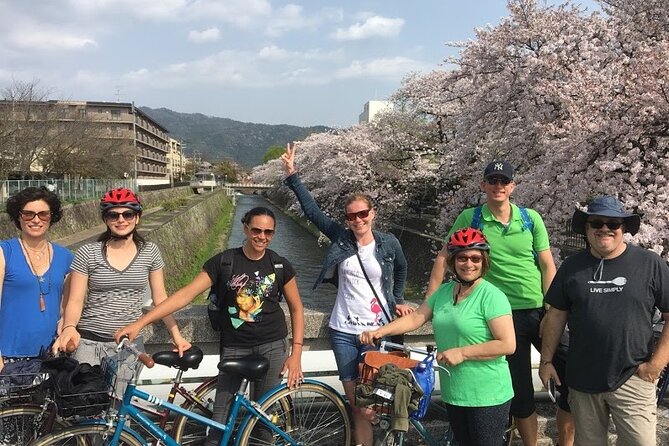
The Philosopher’s Walk is a pleasant link between temple visits. The path follows a canal and passes through leafy surroundings, making it one of the most relaxing stretches of the East Side ride.
The tour allows about 40 minutes here. That is enough for a gentle ride and stops for photos, though conditions can affect the pace. It is not simply a transport corridor. The guide may use the time to discuss local life, the neighborhoods, and the seasonal character of the route.
Some groups have stopped for a picnic near the path after buying prepared food locally. Lunch is not included, so any food costs come from your own pocket. Still, this can be a good way to keep the day informal and avoid losing time in a restaurant.
One East Side account also described a more challenging mountain hike and a city view. That activity is not clearly part of the standard published route, so do not book expecting a hike unless your guide confirms it. The stated Philosopher’s Walk section is the reliable feature.
West Side course: Kinkakuji, the Golden Pavilion
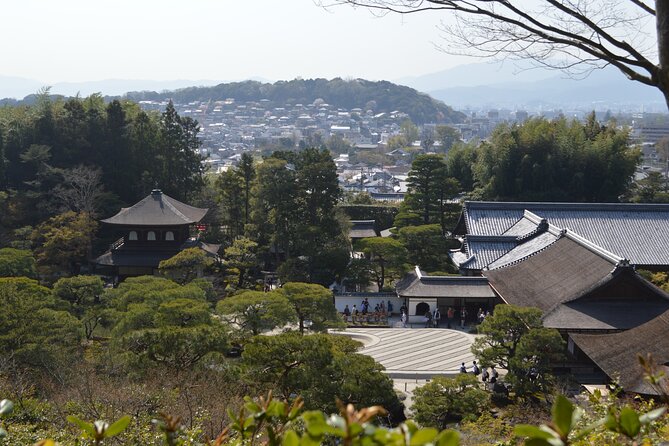
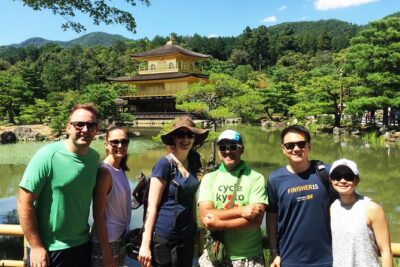
Kinkakuji is one of Kyoto’s most recognizable sights. The upper floors of the Golden Pavilion are covered in real gold leaf, and the structure reflects across the pond in the classic view that appears in countless photographs.
The visit lasts about 45 minutes, with admission included. That is enough to see the pavilion and grounds, but you should not expect a long, quiet exploration of every corner. Kinkakuji is a major attraction, and crowds can be part of the experience.
The guide helps by explaining what you are seeing and keeping the group moving at a sensible pace. You will have time for photos, but this stop is more about the striking view and the setting than about wandering freely for hours.
If Kinkakuji is high on your Kyoto list, the West Side course gives you a practical way to pair it with two other major sights. Just remember that the route involves cycling between several parts of western Kyoto.
Arashiyama Bamboo Forest in half an hour
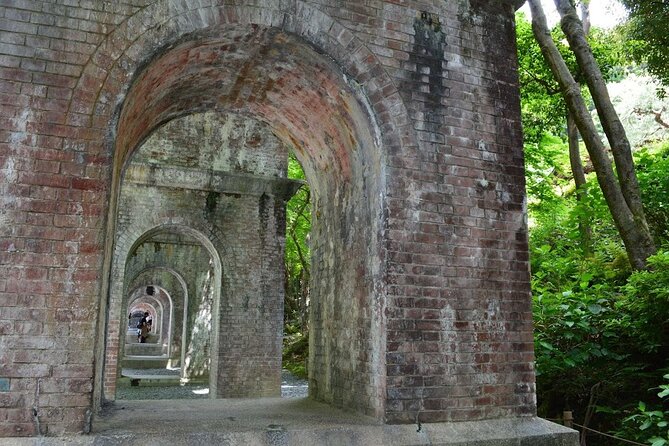
The Arashiyama Bamboo Forest is one of the West Side course’s most famous stops. Tall bamboo surrounds the path, creating a cool, narrow corridor that feels very different from the open spaces around the Golden Pavilion.
The published visit is about 30 minutes. That is enough to walk into the grove, take photographs, and get a taste of Arashiyama, but not enough for a broad exploration of the district. If you want extensive time at the river, bridge, shopping streets, or nearby temples, you would need to return independently.
The short stop is both a strength and a limitation. You cover several headline sights in one day, but no single place receives unlimited time. The grove can also be crowded, so your guide’s route choice and timing make a difference.
For many people, 30 minutes will be enough for the main bamboo experience. If Arashiyama is your top priority, consider visiting it separately on another day.
Ryoan-ji and its famous stone garden
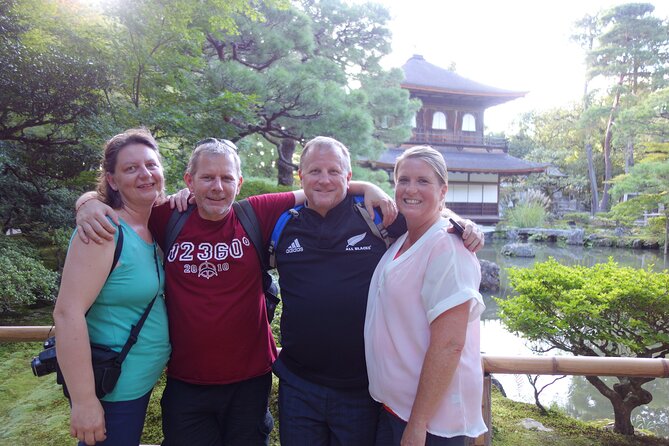
Ryoan-ji provides a quieter, more reflective finish to the West Side course. Its dry garden uses rocks and raked gravel in a simple arrangement that has become one of Japan’s best-known examples of Zen garden design.
The stop lasts about 40 minutes and admission is included. You will have time to sit, look, and hear an explanation of the garden’s imagery and meaning. This is a place where the guide’s storytelling can help, since the arrangement is intentionally spare and may not immediately explain itself.
Ryoan-ji is not an amusement stop. It rewards patience. If you enjoy gardens, symbolism, and calm spaces, it may become your favorite part of the West Side route. If you prefer constant activity, the quiet viewing time may feel slow.
The combination of Kinkakuji, bamboo, and Ryoan-ji gives the West Side course a strong visual range: gold, green, and stone. It is a full day of major sights, with the bicycle making the connections more direct than a series of separate bus rides.
Guides, stories, and the personal touch
The guides are a major reason this tour receives such strong marks. Philippe has been praised for his command of Kyoto, his artistic eye, and his ability to explain details without turning every stop into a lecture. Kevin has been described as friendly, multilingual, and especially good at connecting temple customs with everyday Japanese life.
Niall has also led relaxed rides along the river and through temple areas, adding background on Kyoto and its traditions. The exact guide depends on the date, but the repeated pattern is clear: the human side of the tour matters as much as the route.
A good guide also makes practical adjustments. Festival closures, road conditions, group pace, and crowd levels can affect the day. The guides have adjusted routes while still reaching worthwhile places, which is useful in a city where streets and temple approaches can change quickly.
You can ask questions as you ride. The strongest comments focus on explanations of religion, architecture, local homes, food, and daily life, rather than a string of dates and names. That makes the tour useful for a first Kyoto visit, when you are still trying to understand how the city fits together.
Price, timing, and what you receive
The listed price is $109.43 per person. That is not the cheapest way to rent a bicycle, but it includes the e-bike, guide, facility and landing fees, and admissions to the listed paid sites.
At roughly five and a half hours, the value improves if you want a structured day. You are paying to connect distant sights, avoid getting lost in Kyoto’s maze of lanes, and receive explanations along the way. The advertised duration can range from about three and a half to six hours, so allow a flexible part of your day.
Lunch is not included. Some groups have chosen prepared food from a quality grocery store and made a picnic of it, which can be both economical and enjoyable. You should plan to pay separately for food and drinks.
The meeting point is Kyoto Fun E-Bike Tours & Rentals at 222-2 Koyamacho, Kita Ward. The tour returns there at the end. It is near public transportation, and confirmation is sent when you book.
Free cancellation is available up to 24 hours before the start time. Poor weather or failure to reach the minimum number of participants can lead to a rescheduled date or full refund. Since cycling depends on conditions, keep that policy in mind when arranging tightly packed Kyoto days.
Who should book this e-bike tour?
I would choose this for a first or second Kyoto visit when you want to see major sights but also understand the city between them. It suits adults and older teens who are comfortable on bicycles and can manage several hours outdoors.
It is also a good fit if buses feel slow and walking feels too limited. The e-bike gives you range, while the guide handles route planning and adds meaning to the temples and neighborhoods.
I would think twice if you dislike cycling in urban areas, need a very slow pace, or want long, unhurried visits at only one or two sights. You should also confirm the route before booking, since the East and West courses cover different parts of Kyoto.
Should you book Kyoto Fun E-Bike Tours?
Yes, if you want a full, active introduction to Kyoto and enjoy learning as you go. The strongest reasons are the small group, electric bicycles, local back streets, thoughtful guides, and admissions included in the price.
Choose the East Side for Heian Shrine, Ginkakuji, and the Philosopher’s Walk. Choose the West Side for Kinkakuji, Arashiyama, and Ryoan-ji. Bring comfortable clothes, allow time for a substantial day, and do not assume lunch is included.
This is not a lazy sightseeing loop. It is a hands-on way to connect Kyoto’s temples, gardens, rivers, and neighborhoods. For riders who want more than a checklist of famous gates, it offers good value and a memorable view of the city.
FAQ
How long does the Kyoto e-bike tour last?
The tour is advertised as lasting about five and a half hours, with the available duration described as approximately three and a half to six hours.
What sights are included on the East Side course?
The East Side course includes Heian Shrine, Ginkakuji Temple, and the Philosopher’s Walk.
What sights are included on the West Side course?
The West Side course includes Kinkakuji Temple, Arashiyama Bamboo Forest, and Ryoan-ji Temple.
Is bicycle rental included?
Yes. An e-bike rental is included in the tour price.
Are entrance fees included?
Admission is included for Heian Shrine, Ginkakuji, Kinkakuji, and Ryoan-ji as listed in the tour details.
Is lunch included?
No. Lunch is not included. Food costs are your responsibility.
Where does the tour start?
The tour starts at Kyoto Fun E-Bike Tours & Rentals, 222-2 Koyamacho, Kita Ward, Kyoto, 603-8152, Japan.
Where does the tour finish?
The activity ends back at the meeting point.
How many people can join the tour?
The additional details give a maximum of eight participants. The tour description also refers to groups of no more than six, so the exact group size may vary.
What happens if the weather is poor?
If poor weather causes the tour to be canceled, you will be offered a different date or a full refund.
More City Bike Tours in Kyoto
- 4.5-hr Kyoto Historical Highlights Bike Tour with UNESCO
★ 4.7 · 13 reviews - Lion City Bike Tour of Singapore
★ 5.0 · 6,211 reviews - 3-Hour Porto Highlights on a Electric Bike Guided Tour
★ 5.0 · 4,392 reviews - Porto: City Highlights 3-Hour Guided Electric Bike Tour
★ 4.8 · 3,092 reviews
More E-Bike Tours in Kyoto
- Arashiyama Bamboo Forest E-Biking Tour
★ 5.0 · 183 reviews - Historical Kyoto E-Bike Tour
★ 5.0 · 181 reviews - Best of Kyoto: Ginkakuji & Path of Philosophy E-Bike Tour
★ 4.9 · 79 reviews - Kyoto: Fushimi Inari Shrine and Tofukuji Temple E-Bike Tour
★ 5.0 · 75 reviews
Newly added rides around Kyoto
- Kyoto: City Secrets eBike Tour★ 4.9 · 196 reviews
- Best of Kyoto: Ginkakuji & Path of Philosophy E-Bike Tour★ 4.9 · 79 reviews
- Kyoto: Tailored E-Bike Tour to Highlights & Hidden Gems★ 4.9 · 32 reviews
- Kyoto: Hidden Gems E-Bike Tour with Local Japanese Guide★ 4.9 · 189 reviews
- Kyoto: Half-day Guided Bike Tour with Fushimi Inari★ 4.9 · 21 reviews
- Kyoto: Hidden Gems E-Bike Tour Through Backstreets & Temples★ 4.9 · 54 reviews
- Kyoto: Early Bird E-Bike Tour with Lunch★ 5.0 · 14 reviews
- Kyoto: Full-Day City Highlights Bike Tour with Light Lunch★ 5.0 · 52 reviews
Kyoto Bike Tours, compared.
Arashiyama Bamboo Forest & Hidden Gems Bike Tour (Early Bird)
Read our review →
5 Top Highlights of Kyoto Full Day Bike Tour (E-bike option)
Read our review →
Full Day Biking Tour Exploring the Best of Kyoto
Read our review →

Afternoon Kyoto Bike Tour: Bamboo Forest, Monkeys & Hidden Spots
Read our review →
Browse the lists this tour appears in