
REVIEW · SIEM REAP BIKE TOURS
Siem Reap: Angkor Wat Sunrise Bike Tour & Jungle Breakfast
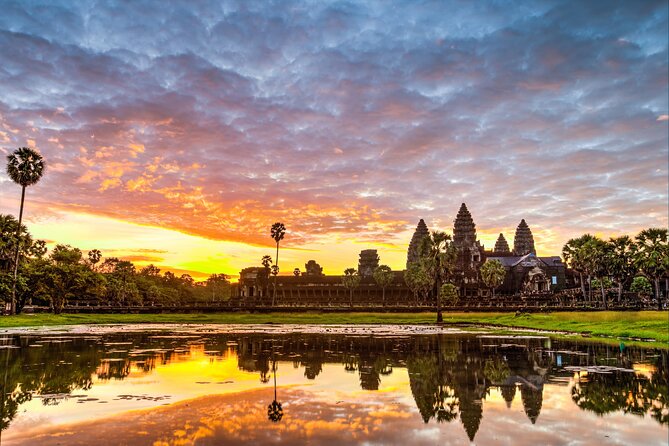
Angkor looks different from a bicycle. This early start combines sunrise at Angkor Wat, temple visits, quiet forest paths, and a chef-prepared jungle breakfast, all with a guide and support van nearby. I like the chance to see more of the archaeological park without spending the whole day in a tuk-tuk, and I like the small maximum group of 10, which leaves room for questions and photo stops.
I also like the practical care built into the day: hotel pickup, helmets, water, fruit, snacks, an air-conditioned van, and meals. Guides such as Chen, Muen, Bun Bath, Som, and Mr. Soda have earned especially warm praise for their humor, temple knowledge, patience, and eye for good photographs. The catch is the cycling. You may cover roughly 22 to 25 kilometers on sandy or uneven jungle tracks, so this is not a gentle sightseeing ride for everyone.
Key points at a glance
- Sunrise begins before dawn: Hotel pickup starts around 4:30 a.m., putting you at Angkor Wat before the day’s heat and crowds build.
- The bicycle changes the route: You use forest tracks, dirt paths, and quiet park roads instead of sticking only to the main tourist roads.
- Breakfast is part of the experience: A private picnic area in the trees includes a chef-prepared meal, with eggs cooked for you according to one detailed account.
- A support van follows the ride: You can refill water, take a break, or ride in the air-conditioned vehicle if the cycling becomes too much.
- The ride requires real effort: Sandy surfaces, gentle hills, and uneven paths call for reasonable bike skills and a fair level of fitness.
- The Angkor pass costs extra: The tour is $75 per person, but you also need the $37 Angkor entrance pass.
Why the bicycle is a smart way to see Angkor
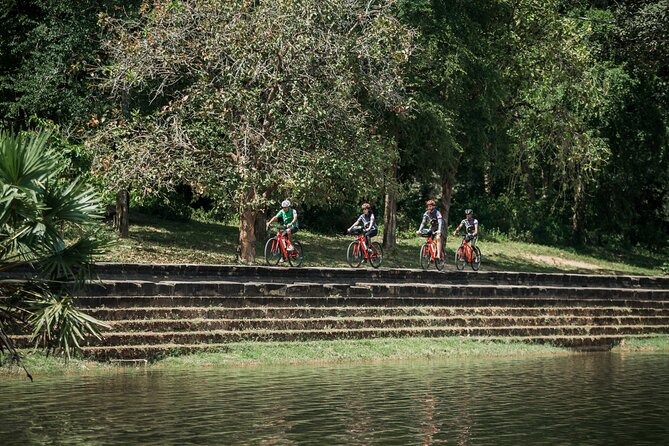
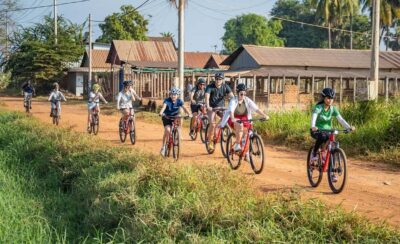
Angkor Archaeological Park is too large to appreciate temple by temple from a single walking route. A bicycle lets you cover ground while keeping you close to the sounds and sights between the monuments. You pass local homes, forest paths, villages, and small rural scenes that are easy to miss from a car.
The roads are not all smooth. Several accounts describe sandy and slippery sections, and one person estimated the full ride at about 22 kilometers, while another put it closer to 25. You may also encounter gentle hills and dirt paths. The pace is described as relaxed rather than competitive, but you still need to control a bike confidently, especially on loose ground.
I see the support van as a major advantage. It travels alongside the group with water and supplies, and you can use it for relief if you need to rest. One person who had not ridden for decades struggled with gears and brakes, then used the van to meet the group at each temple. That option makes the tour more forgiving, though it does not turn the experience into a non-cycling tour.
The bikes were repeatedly described as being in good condition. Helmets are supplied, and guides have helped with mechanical problems, including a flat tire. Still, you should think of this as a mountain-bike outing, not a paved city cycle.
More Nature Bike Tours in Siem Reap:
- Siem Reap: Angkor Wat Sunrise Bike Tour & Jungle Breakfast
★ 4.9 · 141 reviews - NYC: Central Park Bike Rentals
★ 4.2 · 2,528 reviews - NYC: Central Park Bike Rental
★ 4.1 · 1,651 reviews
4:30 a.m. pickup and the first look at Angkor Wat
The day starts early, usually with hotel pickup around 4:30 a.m. You ride in an air-conditioned minivan from Siem Reap to Angkor Wat, which is a welcome comfort at this hour. The transfer also saves your energy for the temples and the bike ride later.
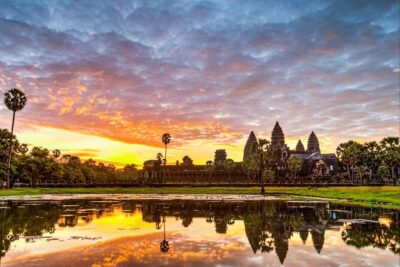
Arriving before sunrise gives you a chance to claim a viewing position near the reflecting pools and watch the lotus-shaped towers come into view as the sky brightens. Sunrise is never guaranteed to be dramatic. Cloud cover can soften or block the colors, and the area can still be crowded, particularly around the most popular viewing spots.
That is an important point. The early start reduces some of the day’s heat and helps with timing, but it does not mean you will have Angkor Wat to yourself. One account described the sunrise area as very crowded and the morning as cloudy. Even so, the cool air, dark silhouettes, and slow change from night to morning make this a strong opening to the day.
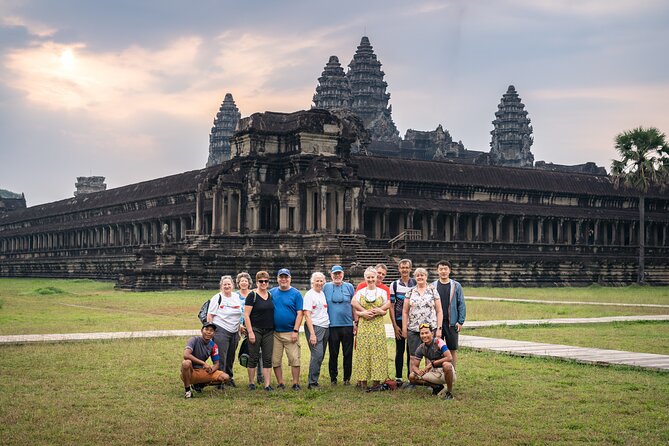
After sunrise, your guide leads you through Angkor Wat’s galleries and courtyards. You hear about its 12th-century construction, architecture, symbolism, and the people connected with the temple. The scheduled temple visit is about an hour, so expect an introduction rather than a detailed study of every gallery.
Wear clothing that works for both temple access and cycling. Comfortable shoes matter, and practical cycling clothes may be more useful than heavy long trousers. One person specifically wished they had worn shorts instead of dressing too formally for the temple sections. You still need suitable coverage for visiting sacred sites, but avoid clothing that becomes uncomfortable on a long, hot ride.
The jungle breakfast is more than a quick snack
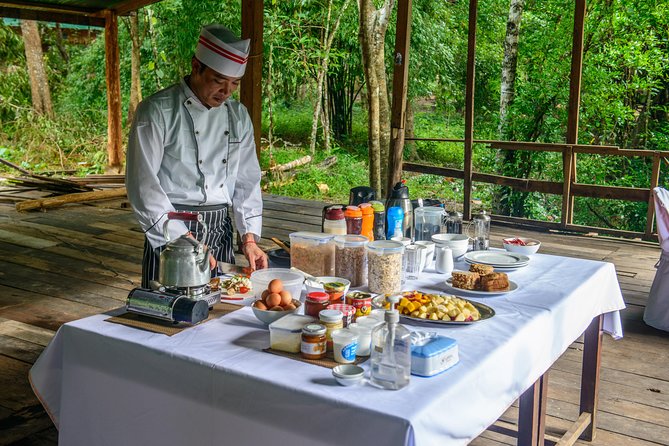
After Angkor Wat, the tour moves to a quiet area within the Angkor complex for a private breakfast picnic. The setting is one of the day’s most distinctive details: you eat in a sheltered area among the trees rather than at a busy roadside restaurant.
The meal is described as chef-prepared, with a continental-style breakfast and eggs cooked on site. Fruit, snacks, and bottled water are also included. After a pre-dawn start and an hour of walking around Angkor Wat, this pause gives you a proper chance to eat before the longer cycling section.
The setting matters as much as the food. A breakfast in the forest creates a calm break between the formal grandeur of Angkor Wat and the more active temple circuit. It also gives the guide time to check the bikes, explain the route, and make sure everyone is ready.
Dietary requirements should be provided when you book. The information supplied clearly lists lunch as included for the private option only, so check exactly what applies to your booking. Do not assume that every $75 booking includes the same lunch arrangement.
Bayon and the ride through quieter paths
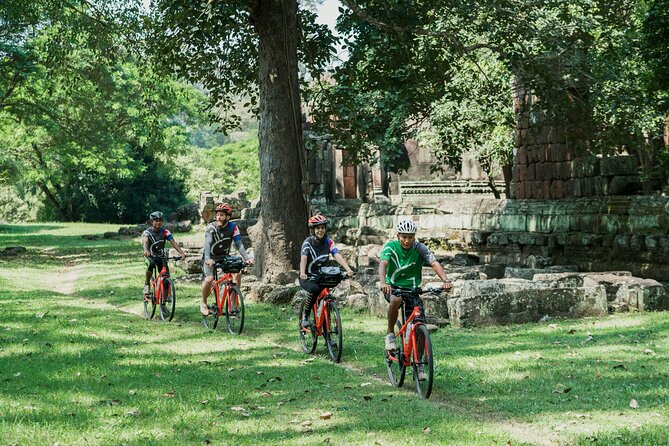
Once breakfast is finished, you begin the main bicycle route. The tour uses gentle park roads, shaded paths, and single-track routes linking the temples. You are not simply riding along a major road from one famous monument to another.
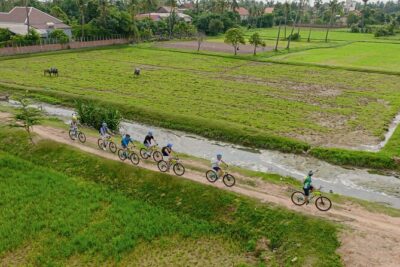
This is where the tour earns much of its appeal. You may pass local homes, small villages, water buffalo, monkeys, or elephants, depending on the day. You also get a feel for the area beyond the stone temples, rather than seeing Angkor as a series of isolated photo stops.
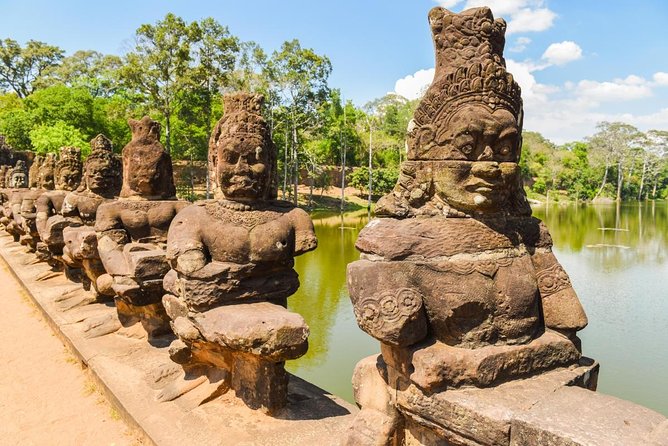
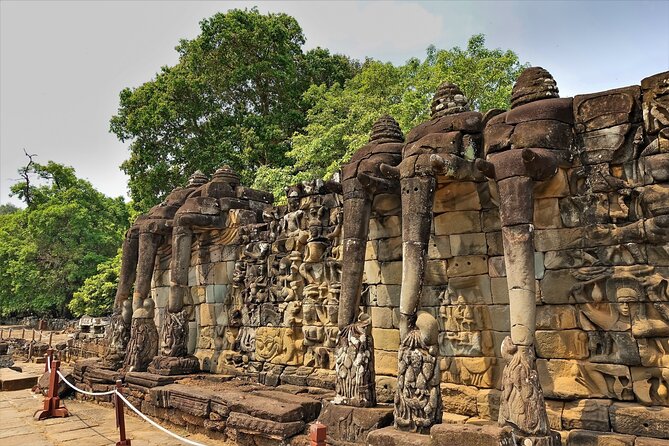
The Bayon Temple is the next major visit. Its many carved faces give it a different mood from Angkor Wat, and the guide helps explain the temple’s architecture and symbolism. The listed stop lasts about an hour, which gives you time to walk among the towers and listen without turning the visit into a rushed stop.
Guides are central to the quality of this section. Chen has been praised for being funny, kind, and clear about what would happen next. Muen was singled out for strong English and the ability to answer questions. Som was especially good at finding photo positions and keeping a 25-kilometer day moving at a comfortable pace. These details matter because the park is large, and a good guide prevents the ride from becoming a confusing search for the next temple.
The route can also be cooler than walking on exposed paths because the trees provide shade and the moving air helps. That does not remove the heat or the effort. You will still be pedaling, walking through temple grounds, and getting back on the bike repeatedly.
More Sunset Bike Tours in Siem Reap:
- Angkor Sunrise Bike Tour / E-Bike or Tuk Tuk
★ 5.0 · 615 reviews - From Siem Reap: Angkor Wat Sunrise and Temples E-Bike Tour
★ 5.0 · 52 reviews - Angkor Wat: Guided Sunrise Bike Tour w/ Breakfast and Lunch
★ 4.8 · 48 reviews - Siem Reap: Angkor Sunset Bike & Boat Tour /E-Bike Available
★ 4.9 · 23 reviews
Ta Prohm brings the strongest visual contrast
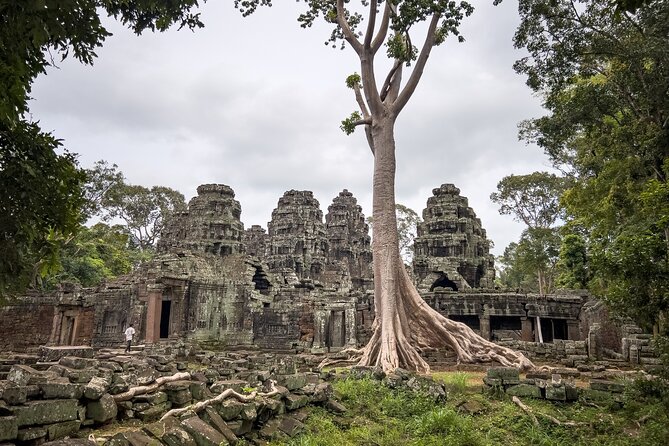
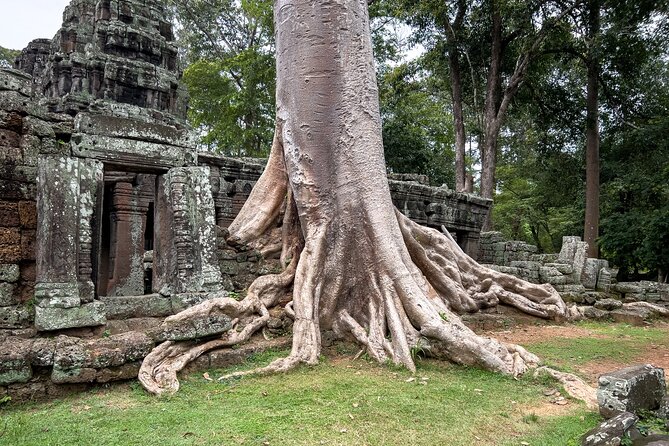
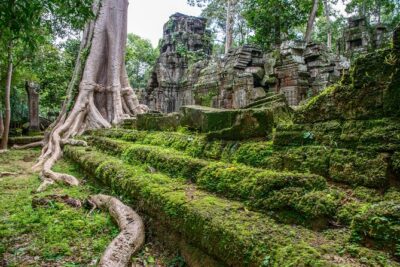
Ta Prohm is often called the Tomb Raider Temple, and it provides a sharp contrast to the open scale of Angkor Wat. Here, silk-cotton and strangler-fig trees push through walls and doorways, with roots twisting around the old stonework.
The temple can be crowded, but arriving by bicycle and following a planned route may help you avoid the busiest moments. Several routes are timed to miss peak periods at certain temples, although no schedule can guarantee quiet conditions.
Your guide adds value here by explaining how the architecture, tree growth, and conservation work fit together. This is also a good place for photographs, but be prepared to walk your bike less often inside the temple area. The tour is not a nonstop ride. It combines cycling between sites with walking across uneven temple grounds.
By this stage, fatigue may be noticeable. You have been awake since before dawn, walked through Angkor Wat, eaten breakfast, and ridden on dirt and sandy paths. The support van can provide a needed break, but you should not wait until you are exhausted to use it.
What the support van, food, and guide add
The air-conditioned minivan is not just the vehicle that brings you from Siem Reap. It stays available during the cycling day, carries water, and offers relief when needed. That makes this tour more practical than a bicycle route with no backup.
Water refills are made regularly, and fruit and snacks help between meals. One person with a back problem managed the route with help from the guide and support crew, while another cyclist used the van after finding the bike difficult to control. These examples suggest that the staff try to adapt, but you should still be honest about your ability before booking.
The guides also help with photographs. Som reportedly carried a GoPro, and several guides were praised for knowing the best angles. This is a useful extra when you are traveling as a couple or solo and want more than hurried self-timer pictures.
At lunch, the details depend on the booking type. The private option includes lunch, while the general inclusion list does not promise it for every departure. The food was described as plentiful and good, with one account mentioning a local restaurant. Confirm the meal arrangement before you pay, especially if the difference between group and private options affects your budget.
Price, park pass, and the real value
The tour costs $75 per person. The required Angkor pass is not included and costs another $37, bringing the known total to $112 per person before any other personal spending.
That is not a low-cost way to see Angkor, but you are paying for more than a bicycle. The price includes hotel pickup and drop-off, an English-speaking guide, the bike and helmet, an air-conditioned support van, breakfast, water, snacks, fruit, and the planning needed to connect several major temples by quieter routes.
I think the value is strongest if you want a full day with minimal planning. You do not need to work out temple order, trail choices, water stops, or transport between Angkor Wat, Bayon, and Ta Prohm. You also get local context and the chance to see village and forest routes that are not part of a basic car itinerary.
The value is weaker if you dislike early mornings, already have private transport, or want a slow temple day with long periods inside each monument. An independent visitor can spend less, but will need to arrange transport and navigation separately. The $37 pass also makes the total cost easy to underestimate.
Who should book this tour?
I would recommend it to people who enjoy active sightseeing and want a closer feel for the area around Angkor. It suits couples, solo visitors, families with older children, and groups with teenagers or adult children. The small group size helps solo participants feel included, and the support van gives families some flexibility.
You should be comfortable riding a bike for several hours, even if you are not an experienced mountain biker. Reasonable skill is required, and the tour includes dirt paths, sand, uneven surfaces, and some hills. If you have not cycled for years, practice with gears and hand brakes before you arrive.
You also need enough stamina for a long day that mixes cycling and walking. The tour lasts about 10 hours, and the 4:30 a.m. pickup makes the first half of the day physically demanding. Bring comfortable clothes, suitable shoes, and rain protection if wet weather is possible. One person was fortunate to avoid rain, while another advised carrying a poncho.
The experience is less suitable if you need a fully paved ride, cannot manage uneven ground, or want to stay inside the van between temples. A child seat can be requested, but the supplied information says it accommodates a child weighing up to 14 kilograms only.
Should you book the Angkor sunrise bike tour?
I would book this tour if you want Angkor Wat plus a real sense of the park beyond its main roads. The sunrise, forest breakfast, shaded paths, local homes, and three major temples give the day a good mix of famous sights and ordinary Cambodian surroundings.
I would skip it if cycling sounds like a chore or if your priority is an easy, air-conditioned temple tour. The support van helps, but the ride remains a serious part of the day. For capable cyclists, the combination of strong guides, good equipment, food, and a carefully planned route makes the $75 price reasonable, provided you add the $37 park pass to your calculation.
FAQ
What time does the tour start?
Hotel pickup and the tour start are scheduled for around 4:30 a.m.
Is the Angkor entrance pass included?
No. The Angkor pass is required and costs $37 per person.
How long does the experience last?
The tour lasts approximately 10 hours.
What temples are visited?
The route includes Angkor Wat, Bayon Temple, and Ta Prohm Temple.
Is the bike ride difficult?
The tour has a relatively low difficulty rating, but it includes dirt paths, sandy or slippery sections, some hills, and a reasonable amount of cycling skill.
Is transport available if I need a break?
Yes. An air-conditioned minivan travels alongside the cyclists and provides water and relief. You can use it when you need to rest.
Is lunch included?
Lunch is listed as included for the private option only. Breakfast, snacks, fruit, and bottled water are included, so confirm the lunch arrangement for your specific booking.
More Morning Departures in Siem Reap
- 3-Hour Morning Bike Tour of Jaipur
★ 5.0 · 1,253 reviews - Haleakala Sunrise Best Self-Guided Bike Tour
★ 4.5 · 745 reviews - Hiroshima in a Nutshell: Morning Bike Adventure
★ 5.0 · 524 reviews - Day Trip to Nami Island with Rail bike and The Garden of Morning Calm
★ 4.5 · 459 reviews
Newly added rides around Siem Reap
- Siem Reap: Bike the Angkor Temples – Full-Day 30km Tour★ 4.9 · 159 reviews
- Siem Reap: Bike Rental★ 4.7 · 12 reviews
- Siem Reap: Countryside Cycle and Local Village Life Tour★ 4.7 · 32 reviews
- Kampong Phluk: Floating Village Sunset Bike Tour or E-Bike★ 5.0 · 11 reviews
- Siem Reap: Countryside Sunset Bike Tour / E-Bike or Tuk Tuk★ 4.7 · 13 reviews
- Siem Reap: Angkor Sunset Bike & Boat Tour /E-Bike Available★ 4.9 · 23 reviews
- Cycle Angkor Backroad Bike Tour / E-Bike or Tuk Tuk★ 4.9 · 16 reviews
- From Siem Reap: Angkor Wat Sunrise and Temples E-Bike Tour★ 5.0 · 52 reviews
Siem Reap Bike Tours, compared.
Siem Reap Countryside Bike Tour / E-Bike or Tuk Tuk
Read our review →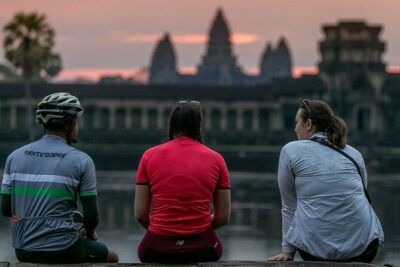
Angkor Wat Sunrise Bike Tour & Jungle Breakfast
Read our review →
Angkor Wat: Guided Sunrise Bike Tour w/ Breakfast and Lunch
Read our review →Browse the lists this tour appears in