
REVIEW · JAPAN BIKE TOURS
Naha: Guided E-Bike Tour of the 12 Zodiac Temples
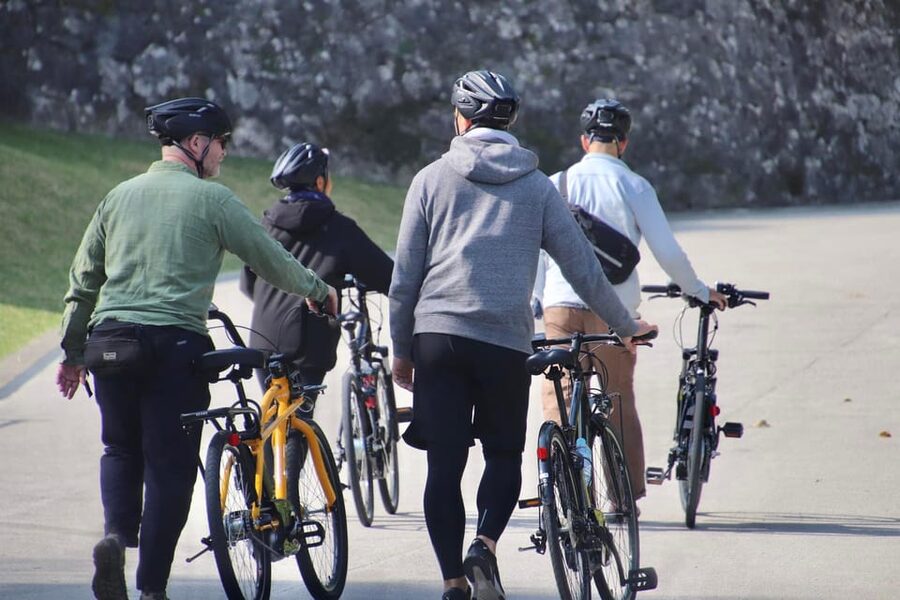
Shuri’s quiet lanes reveal more than grand castles. This three-hour electric-bike tour takes you through temple grounds, local streets, old gates, and small spiritual sites that are easy to miss from a car or standard sightseeing route. I especially like the small group limit of five people, which keeps the ride personal, and the helmet intercom system, which lets you hear your guide without stopping every few minutes.
The e-bikes also make a real difference on Shuri’s hills. Guides including Maki, Maria, Hiro, Reiji, and Jojo have earned praise for clear explanations, friendly care, and safe cycling advice. The main consideration is simple: you need to ride a bicycle confidently, and sandals are not allowed. At $95 per person, this is not a cheap short ride, but the price makes sense if you want local history, transport between scattered sites, and a guide who helps you find places you would likely miss alone.
Key points to know before booking
- Quiet Shuri backstreets: The route reaches temples and shrines tucked away from the main sightseeing roads.
- Electric help on the hills: The bikes take much of the strain out of riding around Shuri.
- Only five people per group: A small party makes it easier to ask questions and receive help with cycling.
- Helmet intercoms included: You can listen and talk while riding instead of gathering around the guide at every stop.
- Several spiritual traditions in one ride: The route includes Buddhist temples, shrine customs, guardian sites, statues, gates, and a spring.
- Best for capable cyclists: You should be comfortable riding in traffic and on uneven or sloping streets.
Why an e-bike is the right way to see Shuri
Shuri is compact enough to explore by bicycle, but it is not flat. That matters. A walking tour can become tiring when temples are spread across slopes, while a car can carry you efficiently but leave you looking at the area through a window. The electric bike gives you a useful middle ground.
You still move at a human pace. You can notice traditional houses, narrow lanes, old trees, and small religious buildings. At the same time, the motor helps on the uphill sections, so you do not arrive at each temple sweaty and worn out.
The guides also give practical help with traffic and directions. That is valuable in an unfamiliar city, particularly when the route shifts between quieter backstreets and roads shared with vehicles. Several guides have been praised for checking that riders were comfortable, giving clear instructions, and making sure everyone stayed hydrated.
The helmet intercom is one of the smartest details. You can hear history and directions while riding, and the group can communicate without stopping constantly. It also gives the tour a friendly, connected feel without forcing everyone to ride in silence.
This is still a bicycle tour, not a sightseeing bus with a few pedals attached. You must be able to ride a bike, control it safely, and follow directions. Comfortable shoes, clothing suitable for cycling, water, sunscreen, and a hat are sensible choices. Flip-flops and sandals are not permitted.
More E-Bike Tours in Japan
- Hidden Kyoto E-Biking tour
★ 5.0 · 1,843 reviews - Tokyo Top Highlights 3h Guided E-bike Tour
★ 5.0 · 714 reviews - 3h Tokyo E-Bike Tour: Hidden Gems, and Local Life with guide
★ 5.0 · 670 reviews
Starting near Makishi Station
The shop is next to a post office, about a five-minute walk from Monorail Makishi Station. The tour starts and ends at the same place, which makes the morning or afternoon easier to plan. You meet the guide there, receive your electric bicycle and helmet, and get ready for the route.
The group size is limited to five participants. That is small enough for the guide to notice if you are struggling with the bike, missing part of an explanation, or need a slower pace. It also means the experience can feel more like a guided outing than a large commercial ride.
The exact starting time depends on availability. Since the ride lasts three hours, leave enough room around it rather than scheduling a rushed meal or another timed attraction immediately afterward.
Smoking is not allowed during the tour. Food, drinks, and temple offerings are also not included. Bring your own water, especially in Okinawa’s warm weather.
Shuri Kannon Temple and the first hill
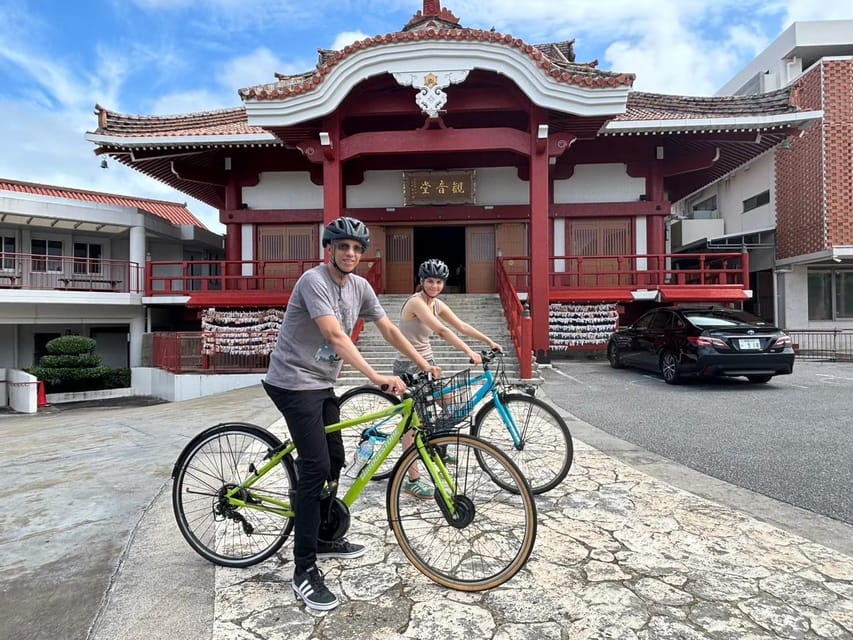
The route heads into the backstreets of Shuri and reaches Shuri Kannon Temple, described as a guardian temple from the Ryukyu Kingdom. The bright red building, carved details, and decorative elements make this an important early stop.
The setting also gives you views over Shuri. That combination is useful: you are not only looking at a religious building, you are beginning to understand how the area rises and spreads around the former royal center.
This stop sets the tone for the tour. The focus is not simply on photographing a famous gate. Your guide explains the customs and history connected with the temples, so the decorations and religious objects have more meaning than they would on a quick solo visit.
The first riding section is listed at about 20 minutes. With an electric bike, that distance should feel manageable for a rider who is used to city cycling. Still, if you have not ridden for years, this is the point to be honest with yourself. The tour is active from the start.
Ankokuj Temple and its old gate
Ankokuj Temple offers a quieter change of mood. The stop is brief, listed at around five minutes, but it includes traditional houses, an ancient gate, and a large gajumaru tree.
The gajumaru, or banyan tree, is one of the visual signatures of Okinawa. Its broad form and exposed roots give the temple grounds a strong sense of age, even when you are not spending a long time there.
I like the short visit here because it keeps the route moving. This is not a tour where every stop receives the same amount of time. Some places are best understood through a quick look and a few useful details before you get back on the bike.
The limitation is that five minutes is not much time for lingering, photography, or quiet reflection. If you prefer a slow temple visit at every stop, the pace may feel brisk. If you want to see several different sites in three hours, the short stop makes sense.
Same handlebars, a completely different route:
- Tokyo Guided Small-Group Biking Tour
★ 5.0 · 1,250 reviews - Bike Tour Exploring North Kyoto plus Lunch
★ 5.0 · 1,087 reviews - Tokyo Great Cycling Tour
★ 5.0 · 811 reviews - Arashiyama Bamboo Forest & Hidden Gems Bike Tour (Early Bird)
★ 5.0 · 613 reviews
Shureimon Gate, Okinawa’s red symbol
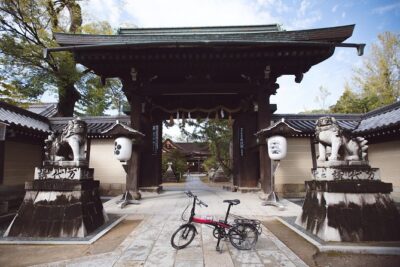
Shureimon Gate is the most instantly recognizable photo stop on the route. Its bright red structure is widely associated with Okinawa, and the tour gives you time to take a picture with your bicycle in front of it.
That bicycle photo is a small but appealing touch. It shows how you reached the gate and gives the stop a more personal feel than another standard portrait beneath a landmark.
The gate also provides a useful contrast with the smaller temples. Here you see one of Shuri’s major symbols, while elsewhere the route takes you to places that can be overlooked. The tour works best when those two sides are kept together: famous architecture for orientation, then less obvious sites for a closer look at local religious life.
Do not expect the gate to be an isolated photo backdrop. The area is an important sightseeing point, so your guide’s role is useful in helping you make the most of the stop without losing the rhythm of the ride.
Daruma Temple and the meaning of the red dolls
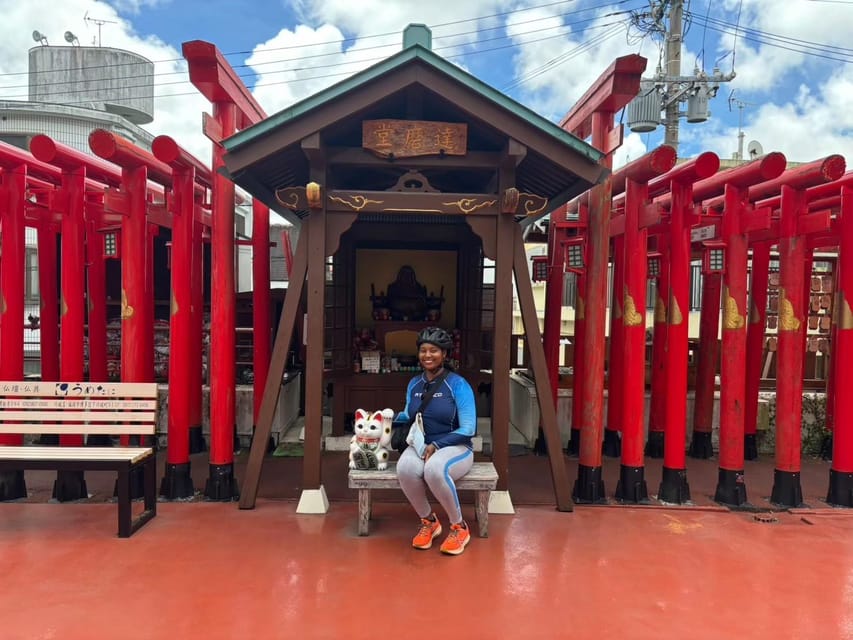
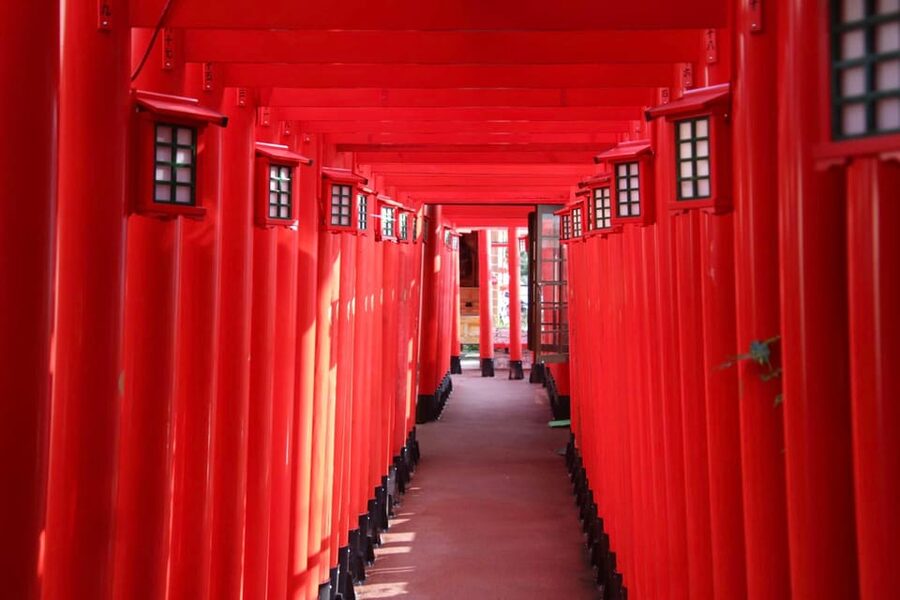
Daruma Temple is associated with prayers for health and pregnancy. The red daruma dolls and torii gate give it a very different visual character from the previous sites.
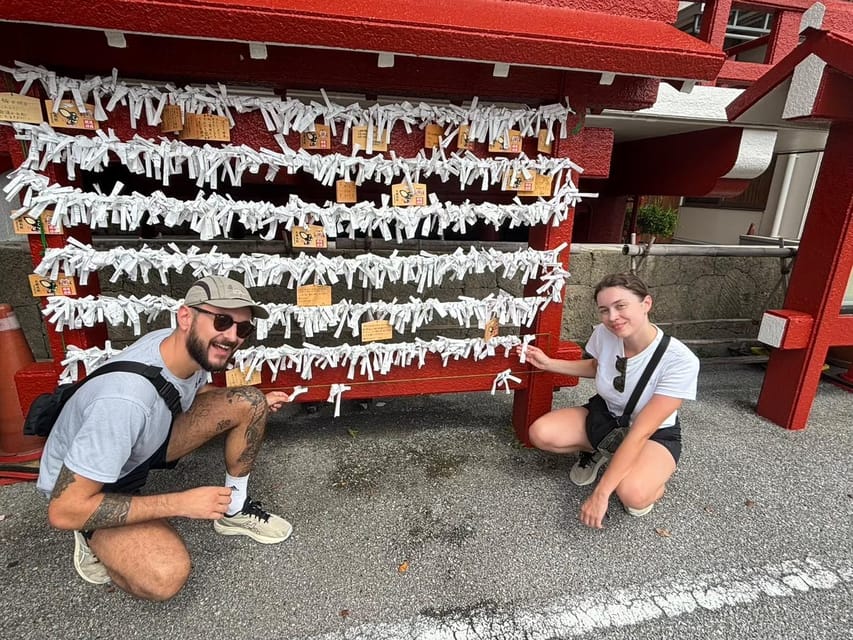
The stop lasts about 20 minutes, enough time to look closely and hear the guide explain the customs connected with the temple. This is one of the places where a guide adds real value. Without context, daruma figures can look like colorful decorations. With an explanation, you begin to understand why people come here and what they hope to express through their prayers.
I also like the range of subjects on this route. You are not being shown the same type of temple repeatedly. Royal-era associations, health prayers, guardian traditions, statues, springs, and memorial spaces all appear within a short ride.
As always at religious sites, offerings are not included. If you want to give money at a temple or shrine, bring some Japanese yen separately. The tour does not cover those contributions.
Seikoji Temple and a quieter pause
Seikoji Temple brings the pace down. It is described as a peaceful place with a sacred atmosphere, Jizo statues, and a modern building. The visit is listed at about 10 minutes.
The Jizo figures are especially interesting because they add a smaller, more intimate human element to the route. After the bold colors of Shureimon Gate and Daruma Temple, this stop lets you pay attention to statues and atmosphere rather than only large structures.
Ten minutes is enough for an introduction, but not for a long meditation. That is worth knowing if you are drawn to quiet religious places and want extended time at each one. The tour is designed as a moving overview, with several stops linked by bicycle, rather than a deep study of one temple.
The guide’s explanation matters here. A calm site with modest architecture can be easy to pass over if you do not know what to look for. With a good guide, the Jizo statues and the modern building become part of the larger story of how old and new religious spaces share Shuri.
Saki Kasahigawa, the forest spring
Saki Kasahigawa is described as a miracle spring flowing from deep in the forest. The water gives the route a natural pause after several temples and gates.
This is one of the tour’s more unusual stops. You are not just moving from one building to another. You are also seeing a place tied to water, local belief, and the physical setting around Shuri.
The description does not promise a long visit, and the spring should be treated as a brief stop within the larger route. Still, it adds texture to the experience. The flowing water helps you imagine why particular places became meaningful, rather than viewing Okinawan spirituality only through architecture.
You may find this stop especially appealing if you prefer small, local points of interest over a schedule made entirely of major monuments. It is also a good reason to bring water and sunscreen. The ride includes outdoor exposure, and Okinawan sun can be strong.
Sogenji Temple and the final return
The last named stop is Sogenji Temple, a former royal mausoleum. The site includes a gate, a gajumaru tree, and a park described as having pure air.
Ending here gives the tour a reflective close. The route has moved through active streets, colorful gates, small temples, and a spring. Sogenji provides a quieter final look at the connection between Okinawa’s royal past, religious practice, and public green space.
From here, you return to the shop. The route includes riding sections of roughly 15 to 20 minutes between some stops, so the final ride is part of the experience rather than a simple transfer.
Guides have sometimes added a little extra when time allowed, including suggestions for additional sights and, in one case, a bakery stop. Do not treat that as guaranteed, but it shows the benefit of a small group and a guide who can respond to the day’s pace.
The guide makes the price work
At $95 per person, the tour costs more than renting a bicycle and visiting a few sites independently. The value comes from what is bundled into those three hours: an electric bike, helmet, intercom, route planning, cycling guidance, and explanations at places that are not always easy to locate.
The small group also matters. A five-person maximum allows more personal attention than a large city tour. Guides such as Maki, Maria, Hiro, Reiji, and Jojo have been singled out for friendliness, safety, good English, clear explanations, and enthusiasm. The tour is offered in English, Chinese, and Japanese, though the guide for your departure will depend on availability.
I would not book this purely to save money. I would book it if you want a guided way to connect several scattered sites and do not want to spend time finding each one yourself. The electric bike is particularly helpful if hills would otherwise limit how much of Shuri you can see.
Free cancellation is available up to 24 hours before departure, and you can reserve while paying later. If precipitation probability exceeds 70 percent or severe weather is expected, the operator may change the plan and will contact you the day before.
Who should book this ride?
I recommend it for confident cyclists who want more than Okinawa’s headline sights. It suits visitors who enjoy history, religious customs, photography, and a little physical activity in the same outing.
It is also a strong choice if you have limited time in Naha. Three hours gives you a guided introduction to Shuri without requiring a full day on foot. The small group format works well for solo participants, couples, and families with cycling experience.
I would skip it if you cannot ride a bike, dislike riding near traffic, or want a slow, stationary temple tour. The route has pauses, but cycling remains the backbone of the experience.
Should you book the 12 Zodiac Temple e-bike tour?
Book it if you want to see Shuri from street level and understand why its smaller temples matter. The mix of electric cycling, intercom communication, red gates, gajumaru trees, statues, and local stories gives you more than a standard sightseeing loop.
The strongest reasons to go are the excellent guides, the small group, and the electric assistance on the hills. Bring proper shoes, water, sunscreen, and an open schedule. If you can ride comfortably and value places you might not locate on your own, $95 is a fair price for three well-organized hours in Okinawa’s historic heart.
FAQ
Where does the tour start?
It starts at ダイショウビル, at the bike shop next to a post office. The shop is about a five-minute walk from Monorail Makishi Station.
How long does the tour last?
The experience lasts three hours.
What is included in the price?
The price includes an electric bicycle rental, a helmet, and a guided tour with an intercom system.
Are meals and drinks included?
No. Meals and drinks are not included. You should bring water.
How many people can join the tour?
The tour is limited to five participants.
Which languages are available?
The tour is offered in English, Chinese, and Japanese.
Do I need to know how to ride a bicycle?
Yes. People who cannot ride a bike are not suitable for this tour.
Can I wear sandals?
No. Sandals and flip-flops are not allowed. Comfortable shoes are recommended.
Does the tour visit Shureimon Gate?
Yes. The route includes Shureimon Gate, where you can take a photo with your bicycle.
What happens if the weather is severe?
If the precipitation probability exceeds 70 percent or severe weather is expected, the operator may change the plan and will contact you the day before.
Newly added rides around Japan
- Private E-MTB guided cycling around Mt. Aso volcano & grasslands★ 5.0 · 16 reviews
- Tokyo Bay Area: Sunset Night View 3h E-bike Guided Bike Tour★ 5.0 · 11 reviews
- Tokyo: West-Side Cycling and Food Tour with Guide★ 5.0 · 37 reviews
- Tokyo: Private Cycling Tour with cute E-bike★ 5.0 · 11 reviews
- Tokyo: 3h Private E-bike Tours, Starting at Your Hotel★ 5.0 · 36 reviews
- Tokyo: 3-hour Guided E-Bike Tour of the City’s Hidden Gems★ 4.8 · 251 reviews
- Tokyo Bike Tour: Shibuya, Harajuku & Hidden Gems★ 5.0 · 20 reviews
- Tokyo: Hidden Gems Guided Bike Tour with Lunch★ 4.5 · 30 reviews
Japan Bike Tours, compared.
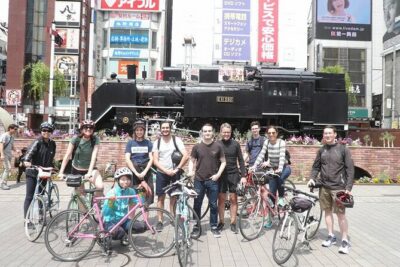


3h Tokyo E-Bike Tour: Hidden Gems, and Local Life with guide
Read our review →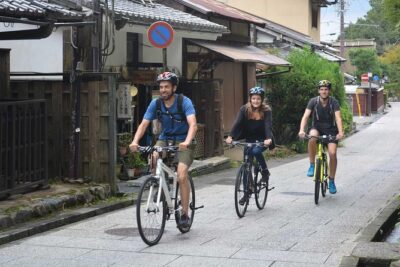
Arashiyama Bamboo Forest & Hidden Gems Bike Tour (Early Bird)
Read our review →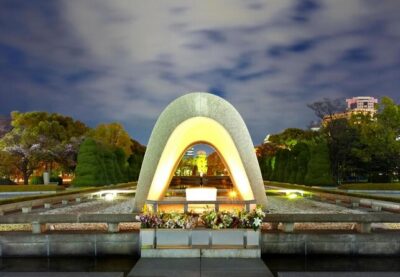
Hiroshima in a Nutshell: Morning Bike Adventure
Read our review →Browse the lists this tour appears in