
REVIEW · TOKYO BIKE TOURS
Tokyo: Hidden Gems Guided Bike Tour with Lunch
Tokyo looks overwhelming from street level. A bicycle makes it manageable. This five-hour ride links Asakusa, Ryogoku, and Fukagawa, showing you old neighborhoods, a Shinto shrine, a Buddhist temple, and a small museum that explains daily life in the Edo era.
I especially like the small group size, limited to five participants, and the fact that the bike, lunch, guide, museum entry, and insurance are included. The route also avoids making the whole day about Tokyo’s biggest sights. You still see Kaminarimon and Sensō-ji, but much of the ride takes you into less touristy parts of eastern Tokyo.
The main consideration is the physical setup. You need to be at least 150 centimeters tall, comfortable on a bicycle, and ready to start on time. Vegetarian food is limited, and the tour can be cancelled for unsafe weather.
Key Points Before You Book
- Five hours on two wheels: You ride between Asakusabashi, Asakusa, Ryogoku, and Fukagawa, with several walking stops.
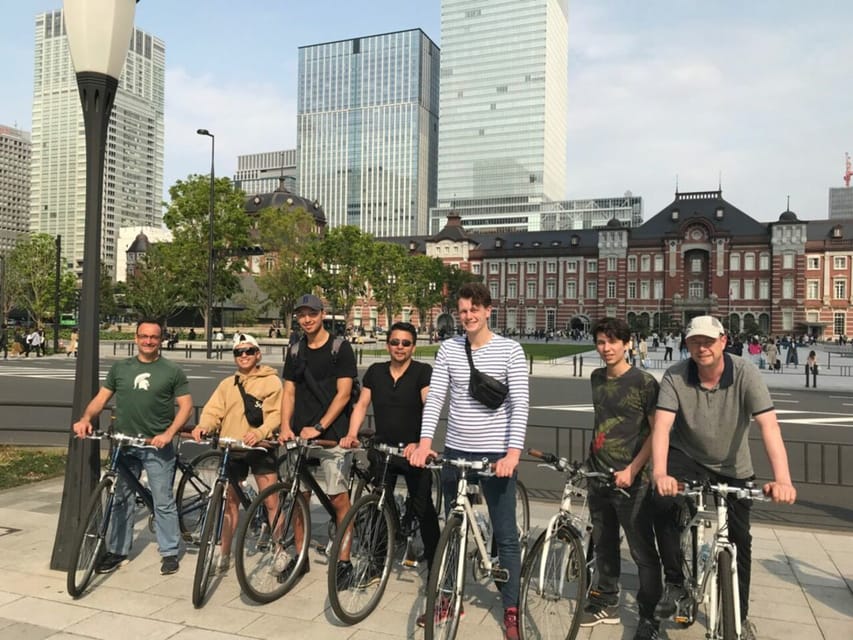
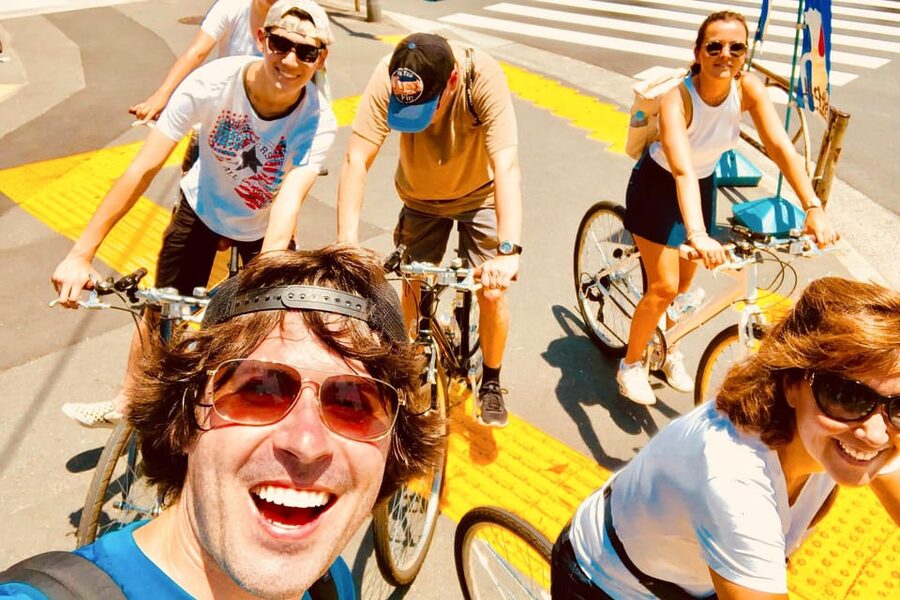
- A compact English-speaking group: The tour is limited to five participants, though other participants may join your departure.
- Lunch and a café stop included: You get a local restaurant meal in Ryogoku, followed by a short café visit.
- A useful Edo-era history lesson: Fukagawa Edo Museum recreates streets and homes from roughly 150 years ago.
- Good value for a guided outing: At $96 per person, the price covers the rental bike, guide, lunch, museum admission, and insurance.
- Not for every schedule: You must meet at Asakusabashi Station Exit A3 on time, and luggage cannot be stored at the bike office.
Starting at Asakusabashi Station
Your day begins outside Exit A3 of Asakusabashi Station on the Toei Asakusa Line. Look for the guide waiting outside the exit. This detail matters in Tokyo, where a station can have several exits and a wrong turn can cost you valuable time.
The guide starts with a short lecture about traffic rules in Japan. That is a sensible opening, especially if you do not normally cycle in a large city. You will want to listen carefully rather than treating it as a formality, since the ride moves through urban streets and busy sightseeing areas.
The bikes are included, as is insurance. You do not need cycling clothing, but comfortable shoes are required. The operator welcomes all cycling levels, although the tour is not suitable for children under 15. The 150-centimeter height minimum is another practical restriction to check before booking.
The group size is one of the strongest features here. With no more than five participants, you should have a better chance to hear the guide and ask questions than on a large bus or walking tour. The guide may be Shogun, who received especially strong praise for keeping the ride moving while still giving useful historical background.
More Bike Tours with Lunch in Japan
- 5-Hour Tokyo & Edo Hidden Gem Bike Tour with Lunch
★ 5.0 · 113 reviews - Bike Tour Exploring North Kyoto plus Lunch
★ 5.0 · 1,087 reviews - 5-Hour Osaka Highlights Bike Tour with Lunch
★ 4.8 · 146 reviews
Bandai Figures and Tokyo’s Most Famous Gate
The first stop is the Bandai headquarters, where large figures of familiar characters such as Dragon Ball and Doraemon provide a fun photo opportunity. This is a quick, distinctly modern contrast to the older streets and temples that follow.
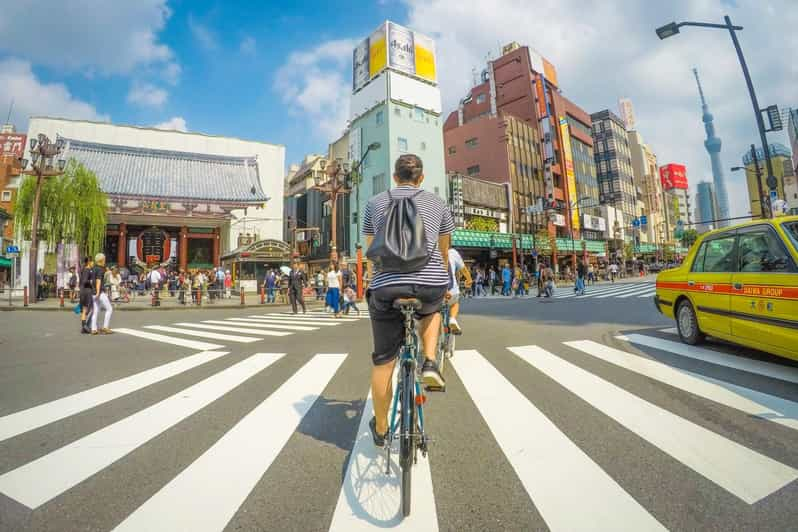
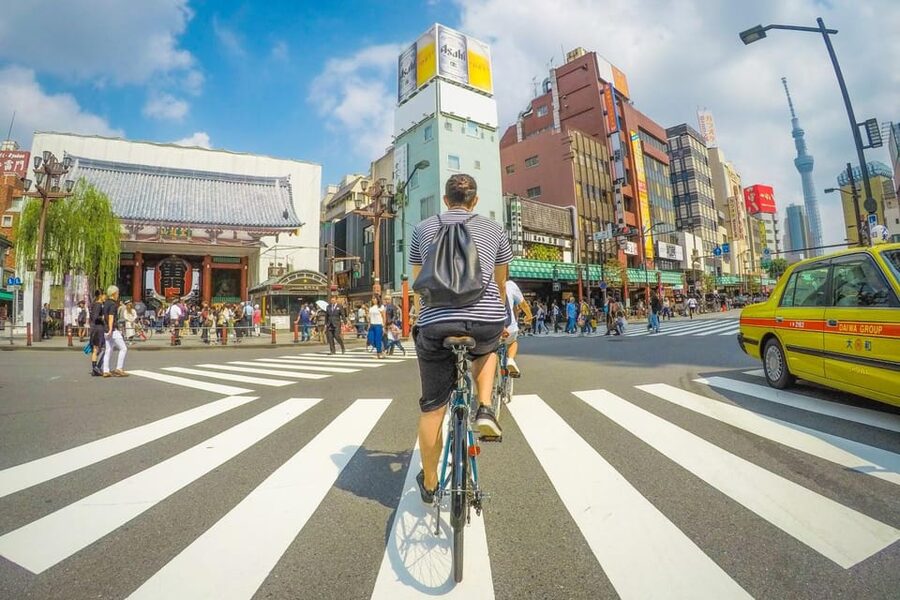
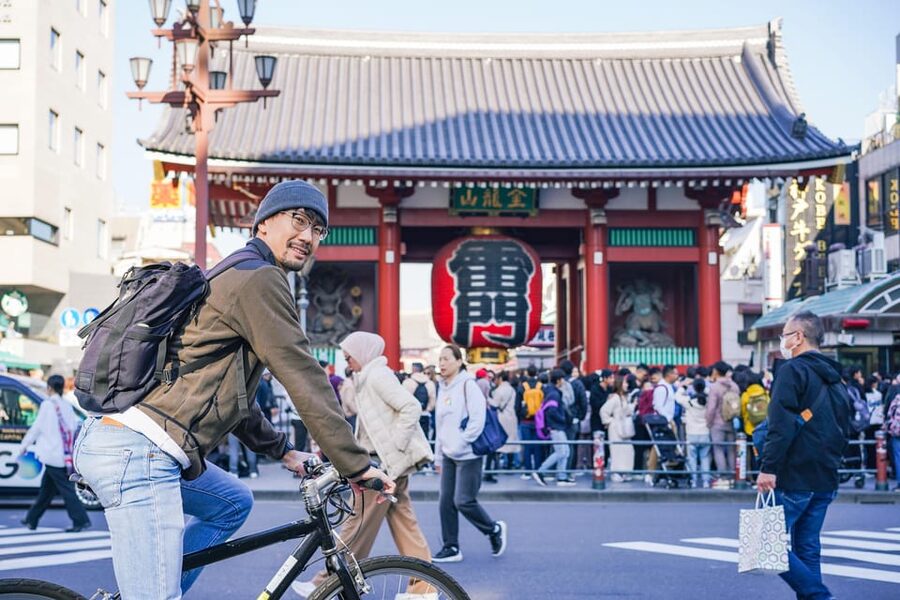
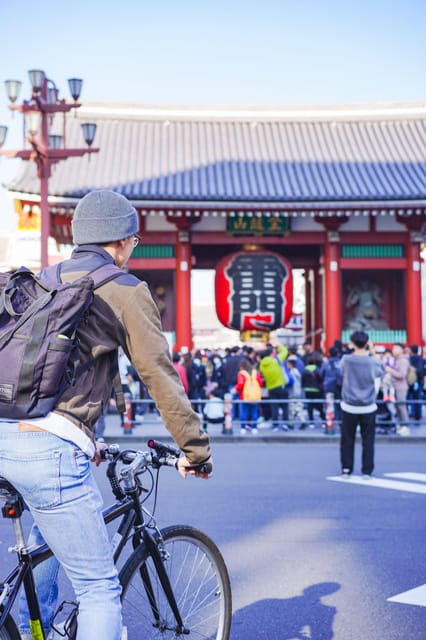
You then ride toward Kaminarimon, the great entrance gate to Asakusa. The stop lasts about 10 minutes, enough to take in the gate and get oriented before continuing. This is one of Tokyo’s most photographed spots, so do not expect solitude. The appeal of the tour is not that it removes every crowd. Instead, it lets you see the famous place efficiently and then moves you onward.
Sensō-ji receives about 30 minutes. As Tokyo’s best-known Buddhist temple complex, it gives you a clear introduction to the religious side of the city. The guide can explain what you are seeing, which is helpful if you are unfamiliar with temple customs and Japanese worship.
I like this early portion because it gives you recognizable Tokyo without allowing the entire tour to become a checklist of famous sights. You get the gate and temple, take your photos, and then return to the bicycle.
Skytree Views Along the Sumida River
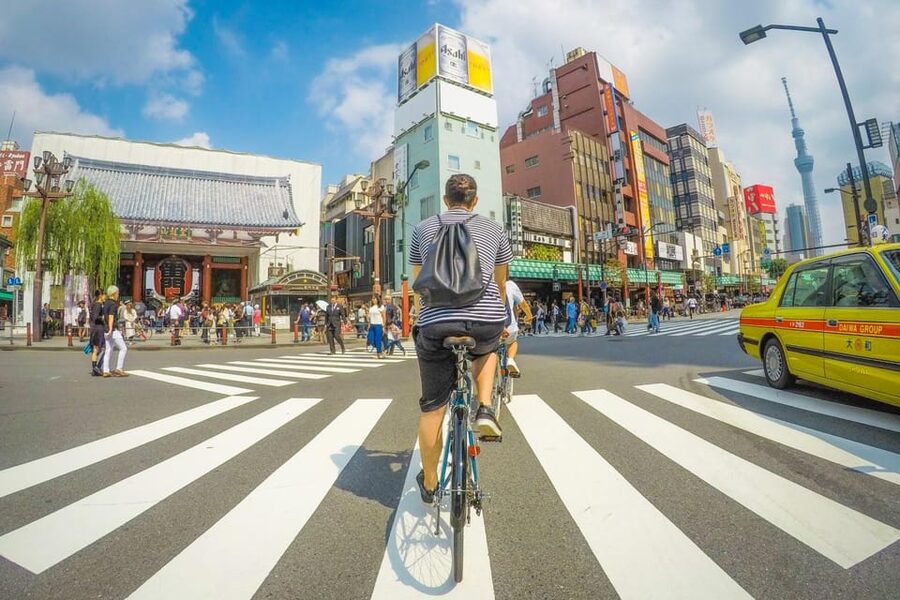
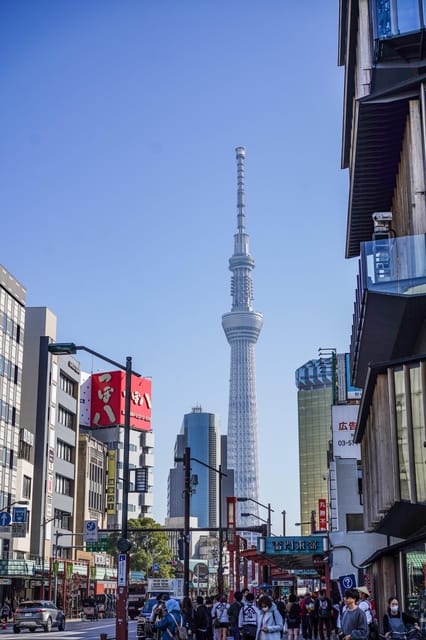
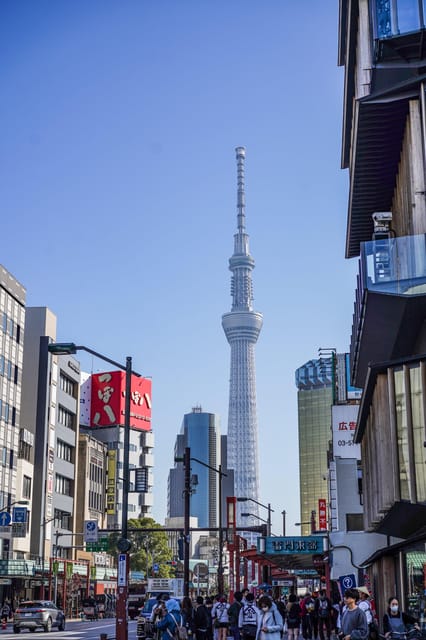
One of the prettiest sections comes as you cross a bridge with views toward the Sumida River and Tokyo Skytree. At 634 meters, Skytree is the world’s tallest radio tower, and its height makes it an easy reference point as you move through eastern Tokyo.
The route then continues toward Ryogoku, the city’s sumo district. Cycling gives you a useful sense of distance between these neighborhoods. You are not simply being dropped at isolated attractions. You are moving through the city and seeing how the areas connect.
The route description calls this a refreshing ride, but you should keep expectations sensible. Tokyo remains a city, and this is not a quiet countryside cycle. Traffic, weather, and the day’s operating conditions can affect the route and the order of stops. The itinerary may change, and a closed location may be replaced with another stop.
Still, the river crossing and Skytree view provide a welcome change from dense streets. If you enjoy seeing a city from street level, this may be more rewarding than moving between sights by train.
Ryogoku, Sumo Country, and Lunch
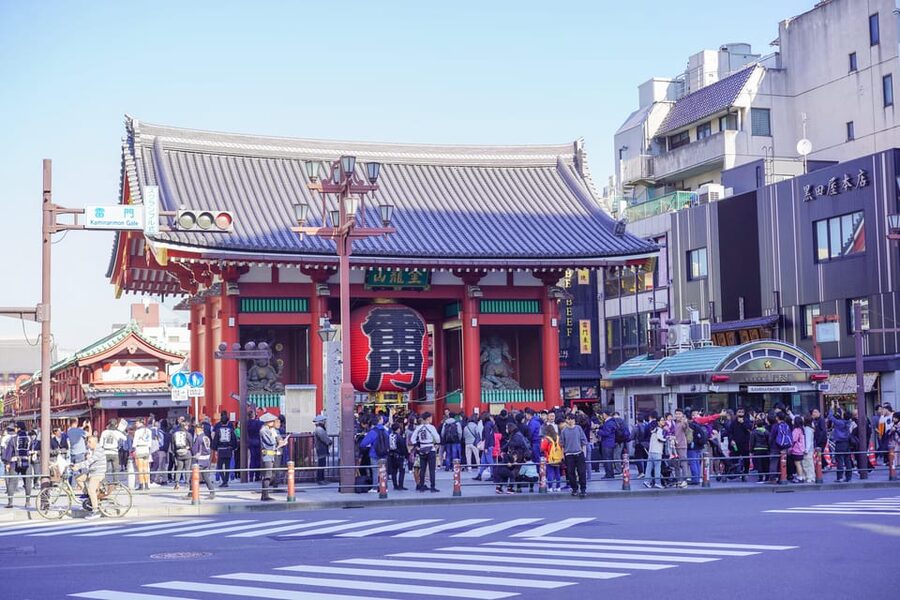
Ryogoku is known as Tokyo’s sumo town, and you take a short walk around the area before lunch. The experience focuses on the district’s sumo identity rather than promising entry to a tournament, stable, or match. That distinction is important. You are getting local context and neighborhood sightseeing, not a dedicated sumo event.
Lunch takes place at a local restaurant and lasts about 45 minutes. It is included in the price, which makes the day easier to budget. A meal also breaks up the riding at a useful point, giving you time to rest before the afternoon stops.
Food choices may be limited if you are vegetarian. Japanese restaurants are not always prepared with broad vegetarian menus, and this tour specifically warns that vegetarian options are restricted. If you have dietary needs, ask about the meal before committing rather than assuming a substitute will be available.
One useful detail from the experience is that there is no hard-sell warehouse stop. Some city tours steer people toward a shop or sales presentation. This one keeps its focus on neighborhoods, history, food, and cycling, which helps the $96 price feel more reasonable.
More Bike Tours with Lunch in Tokyo:
- Versailles Full Day Bike Tour with Palace, Gardens, & Picnic
★ 5.0 · 2,217 reviews - From Paris: Versailles Bike Tour w/ Palace, Gardens, & Picnic
★ 5.0 · 2,150 reviews - Electric Cycling Tour of Ubud with Free Hotel Transfer and Lunch
★ 5.0 · 1,397 reviews - Bangkok: Bike and Canal Boat Tour with Lunch
★ 4.9 · 1,350 reviews
Worship at Fukagawa Fudo-son Temple
After lunch, you cycle to Naritasan Fukagawa Fudōdō, also called Fukagawa Fudo-son Temple. This Buddhist temple provides a different experience from Sensō-ji. Rather than only looking at a large landmark, you are introduced to the way Japanese people worship in daily life.
The planned visit lasts about 35 minutes. That is enough time for the guide to explain the setting and for you to look around without turning the stop into a rushed photo break. The temple also broadens the religious picture of the tour. Sensō-ji introduces one major Buddhist site in Asakusa, while Fukagawa Fudo-son gives you another setting farther from the city’s main sightseeing core.
The two temple stops work well together. At Sensō-ji, you see one of Tokyo’s headline attractions. At Fukagawa Fudo-son, you spend time in an area that feels more connected to ordinary local worship. You should not expect a long formal religious lesson, but the guide can help you understand what you are seeing and why the site matters.
Edo Life at Fukagawa Edo Museum
The Fukagawa Edo Museum is the most distinctive stop on the route. You spend about 45 minutes inside a small historical museum showing what streets and homes looked like during the Edo period, which lasted from 1603 to 1868.
The value here is practical. Dates and names can feel abstract until you see the scale of houses, the layout of streets, and the way people lived. The museum turns the earlier comments about Edo-era Asakusa and Ryogoku into something easier to picture.
This also helps balance the modern side of Tokyo. In one part of the day, you photograph cartoon figures and the world’s tallest radio tower. Later, you look at a recreated older city. That contrast is one of the strongest reasons to choose this route instead of a tour focused only on contemporary shopping and major landmarks.
The museum visit is included, so you do not need to pay another admission charge. The planned 45 minutes should give you a useful overview, though travelers who want to read every display in detail may find the time short.
A Short Café Break Before Returning
The final listed stop is a local café for about 15 minutes. It is a brief pause rather than a full second meal, and additional food or drink is available for purchase.
Afterward, you cycle back to Asakusabashi Station, where the activity ends at the original meeting point. The round-trip format is convenient because you do not have to work out a new route back to your hotel or another station.
The full experience lasts five hours. That is long enough to cover several neighborhoods without feeling like a quick sampler, but it is also a real half-day commitment. Plan the rest of your day around it, especially if you have an evening reservation or a timed attraction elsewhere in Tokyo.
What the $96 Price Covers
The $96 cost is fair if you value guidance and convenience. You receive the rental bike, an English-speaking guide, lunch, entry to Fukagawa Edo Museum, and insurance. Paying separately for those elements could easily make a self-planned day less simple, even if public transportation might cost less.
The strongest value comes from the interpretation. You are not only renting a bike and following a map. The guide connects the Edo period, sumo, Buddhist worship, local neighborhoods, and modern Tokyo. A good guide can also adjust explanations to your interests, which is easier with a group of five than with a large tour.
The price is less compelling if you want a fast, athletic cycling outing or prefer to explore entirely on your own. The ride includes several walking and sightseeing stops, so it is designed as a cultural tour with cycling between locations. It is not a long-distance bike trip.
The inclusion of lunch is helpful, but food preferences may narrow the value for vegetarians. Additional drinks and snacks are not included, so carry money for the café and any extras.
Timing, Weather, and What to Carry
Arrive early at Asakusabashi Station Exit A3. The group starts on time, and you cannot join later, reschedule, or receive a refund if you miss the departure. In Tokyo, that makes an early arrival especially wise.
Do not bring luggage. The rental bike office cannot store it, so use station lockers or leave larger bags at your accommodation before the tour. A small personal bag is more practical than a suitcase, but the information provided does not specify storage for any particular type of bag.
Wear comfortable shoes and ordinary clothing that allows you to ride. Dedicated cycling clothing is not required. Bring only what you need for the five-hour outing, since carrying extra weight on a bicycle quickly becomes annoying.
Weather is another real factor. The tour may be cancelled for safety if conditions are unsuitable, and traffic, weather, and operating issues can change the order of the itinerary. If this ride is important to your schedule, keep some flexibility around it.
Free cancellation is available up to 24 hours before departure for a full refund. You can also reserve now and pay later, which helps if your Tokyo schedule is still shifting. Travel insurance is recommended independently.
Who Will Enjoy This Tokyo Bike Tour?
I would choose this tour if you want a guided introduction to eastern Tokyo and like changing neighborhoods rather than spending five hours in one major attraction. It suits first-time visitors who want context for Asakusa, Ryogoku, and Fukagawa without joining a large coach group.
It is also a good choice for people who enjoy local food, temples, museums, and light outdoor activity in equal measure. The small group lets the guide keep the pace moving, and the route gives you several kinds of Tokyo in one morning or afternoon.
You may want another option if you dislike cycling in cities, need a fully vegetarian meal, are under 15, or are shorter than 150 centimeters. It is also not ideal if you need to carry luggage or if your schedule cannot tolerate a weather-related change.
The praise for Shogun points to what matters most here: a guide who can keep the ride at a good speed while explaining the city. That balance is more important than the number of stops. You want enough movement to feel that you are seeing Tokyo, but not so much that every temple becomes a blur.
Should You Book It?
Book this tour if you want a compact, well-rounded look at old and modern Tokyo, with a bike doing the connecting work. The included lunch, museum admission, rental bike, insurance, and small group make $96 a reasonable price for a five-hour experience.
Skip it if you want a serious cycling challenge, a guaranteed vegetarian meal, or an entirely flexible day. For most visitors who can ride comfortably and arrive on time, this is a smart way to see eastern Tokyo beyond the biggest postcard stops.
FAQ
Where does the Tokyo bike tour begin?
It begins outside Asakusabashi Station Exit A3 on the Toei Asakusa Line. A guide will be waiting outside the exit.
Where does the tour finish?
The tour returns to Asakusabashi Station and ends at the original meeting point.
How long does the activity last?
The tour lasts five hours. Starting times vary, so you need to check availability when booking.
What is included in the price?
The price includes bike rental, an English-speaking guide, lunch, admission to Fukagawa Edo Museum, and insurance.
Is the tour suitable for beginners?
All cycling levels are welcome. You must be at least 150 centimeters tall, and the tour is not suitable for children under 15.
Is vegetarian food available?
Vegetarian choices are limited because many Japanese restaurants are not fully prepared to provide vegetarian menus. Check the meal details before booking if this is important for you.
What happens if the weather is bad?
The tour may be cancelled for safety reasons in unsuitable weather. Traffic, weather, and operating conditions can also change the order of the stops.
More Lunch Experiences in Tokyo
- Cat Ba: Lan Ha, HaLong bay full day- biking, kayaking, lunch
★ 4.8 · 1,166 reviews - Electric Bike Beach Adventure with Tequila Tasting and Lunch
★ 5.0 · 1,162 reviews - Appian Way Aqueducts Bike Tour (Catacombs & Lunch Option)
★ 5.0 · 975 reviews - Saint-Emilion Electric Bike Day Tour with Wine Tastings & Lunch
★ 5.0 · 696 reviews
Newly added rides around Tokyo
- Tokyo: Private Cycling Tour with cute E-bike★ 5.0 · 11 reviews
- Tokyo Bay Area: Sunset Night View 3h E-bike Guided Bike Tour★ 5.0 · 11 reviews
- Tokyo: West-Side Cycling and Food Tour with Guide★ 5.0 · 37 reviews
- Tokyo: 3h Private E-bike Tours, Starting at Your Hotel★ 5.0 · 36 reviews
- Tokyo: 3-hour Guided E-Bike Tour of the City’s Hidden Gems★ 4.8 · 251 reviews
- Tokyo Bike Tour: Shibuya, Harajuku & Hidden Gems★ 5.0 · 20 reviews
- Tokyo: 3-Hour Bike or E-Bike Tour of City’s Hidden Gems★ 4.7 · 81 reviews
- Tokyo: 2-Hour Night Bike Tour of the City’s Hidden Gems★ 4.9 · 25 reviews
Tokyo Bike Tours, compared.
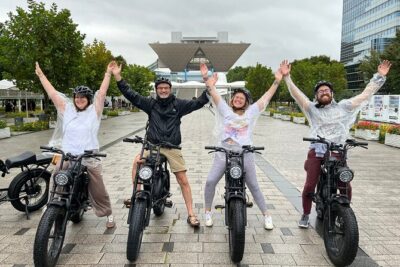
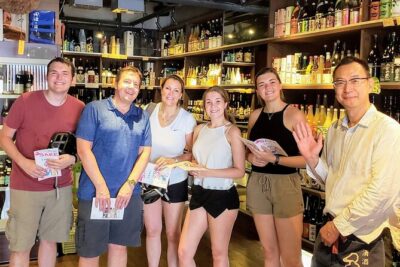
3h Tokyo E-Bike Tour: Hidden Gems, and Local Life with guide
Read our review →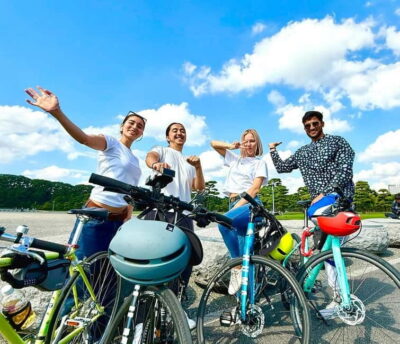
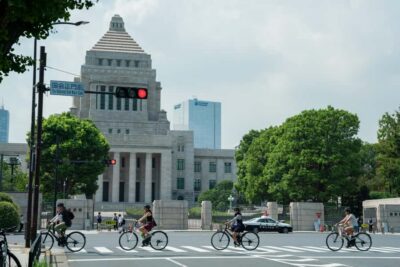
3-hour Guided E-Bike Tour of the City’s Hidden Gems
Read our review →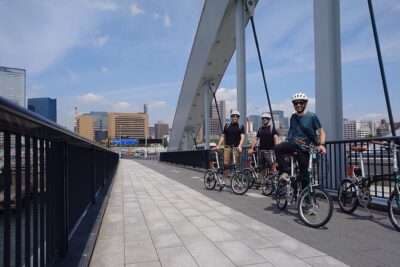
3-Hour Tokyo Private E-Bike Tour Starting from Your Hotel
Read our review →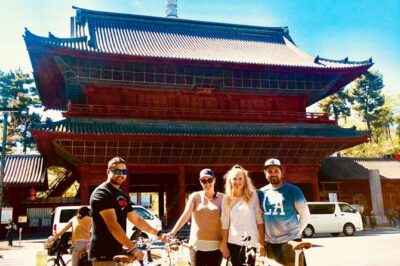
5-Hour Tokyo & Edo Hidden Gem Bike Tour with Lunch
Read our review →Browse the lists this tour appears in