
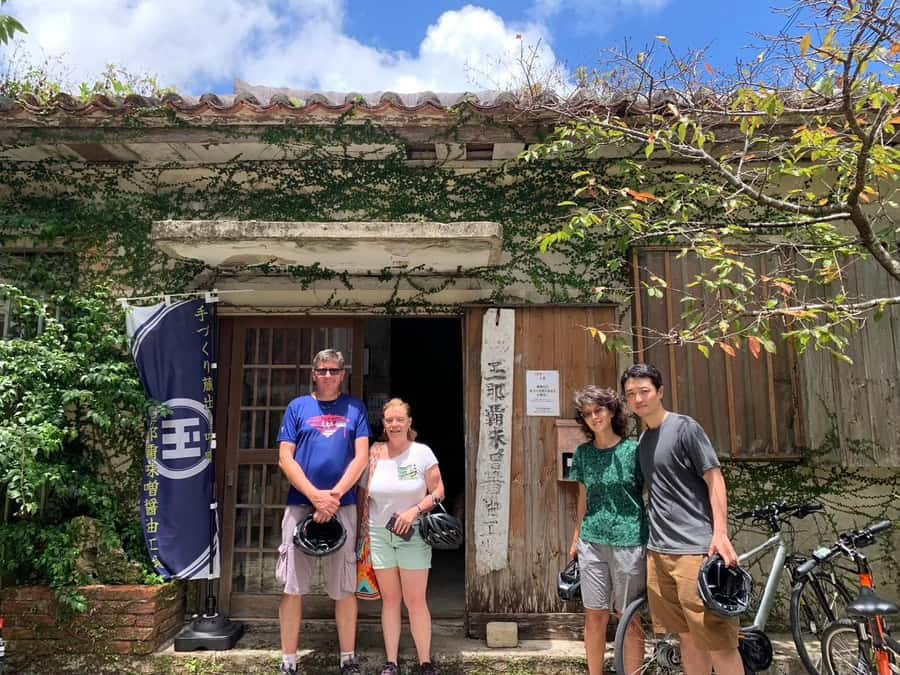
REVIEW · JAPAN BIKE TOURS
Shuri+Naha: Cycling Tour Explore Water Heritage with E-Bike
Water tells Okinawa’s story. This three-hour e-bike tour links Naha’s rivers, springs, old stone steps, Shuri Castle, and quiet residential lanes in a compact ride that feels far removed from the city’s main streets. I especially like the chance to see how local life grew around water, and the small group limit of five makes it easier to hear your guide and ask questions.
I also like the stop for handmade Ryukyu sweets. These traditional confections connect the ride to the former royal court in a way a quick castle visit cannot. Guides such as Aki, Sally, Maki, Jo-Jo, and the highly praised English-speaking guides bring the route to life with history and practical support.
The main consideration is physical: you need to ride a bicycle and handle hills, stone steps, slippery roads, and rocky areas near water. An electric-assist bike helps with the climb to Shuri, but this is still an active outing rather than a casual sightseeing bus tour.
Six Details That Make This Ride Different
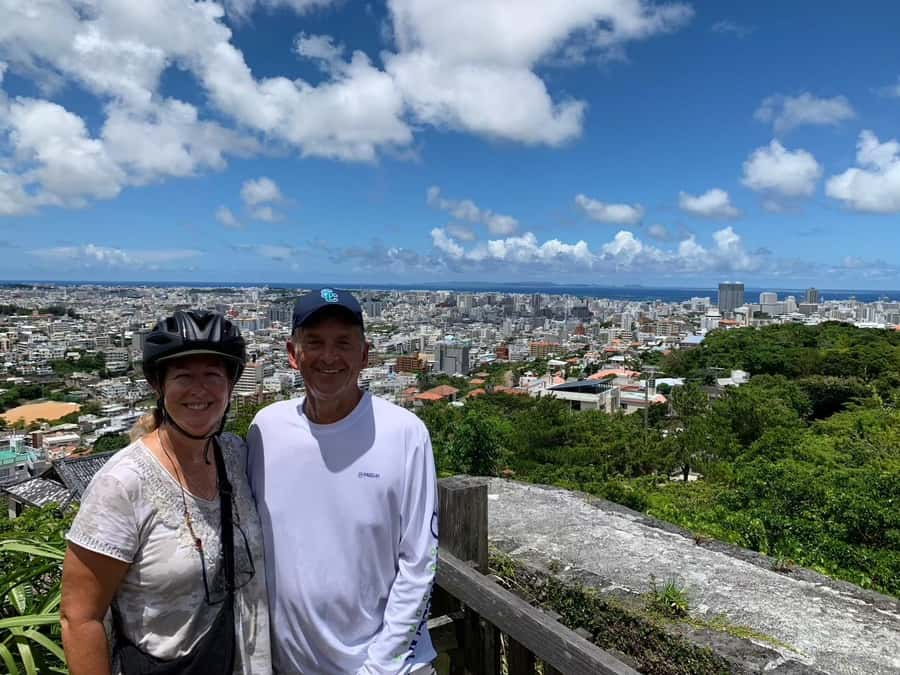
- Springs in the middle of Naha: You leave the monorail and city streets behind to reach waterfalls, forested water sources, and places where waterfowl gather.
- A small group of five: The limited size gives you more direct contact with the guide and a safer feel on city roads.
- Ryukyu sweets by hand: You can see traditional confectionery being made and taste recipes linked to the era of the Ryukyu Kingdom.
- Shuri by electric bicycle: The motor assist makes the uphill route more manageable while keeping you close to the streets and scenery.
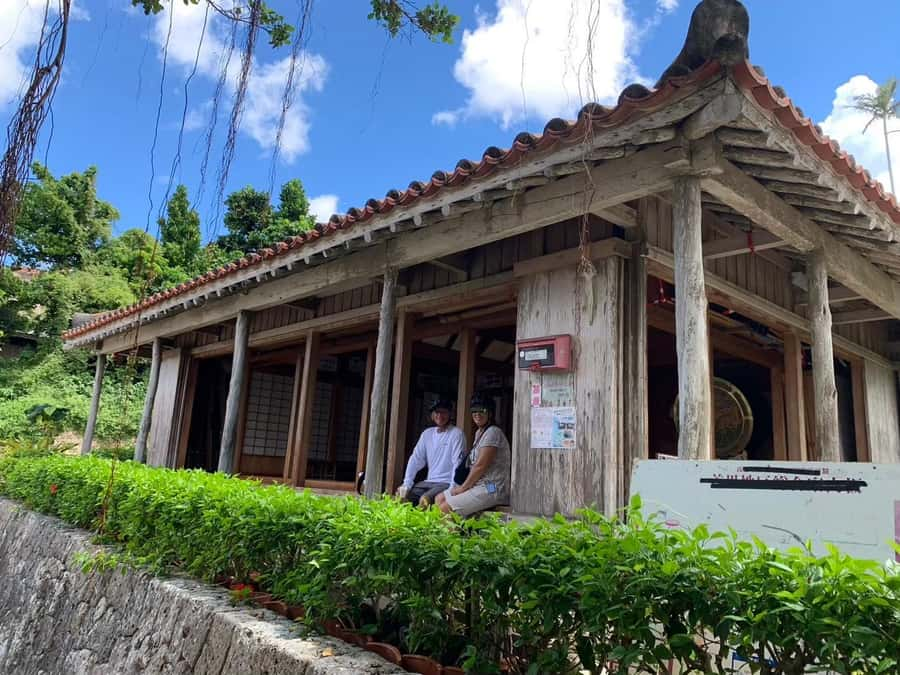
- A close look at ordinary Okinawa: Traditional homes, modern houses, red roofs, stone pillars, and guardian figures appear along the route.
- Strong guide feedback: Aki, Sally, Maki, Jo-Jo, and other guides have been praised for clear explanations, care, and friendly English service.
Starting Near Makishi Station
The tour begins at the e-charity Naha Kokusai-dori main shop, next to Makishi Post Office and about one minute from Makishi Monorail Station. That location is practical if you are staying near central Naha or using the monorail before the ride.
You pick up your electric bicycle, receive a helmet with an intercom system, and get a short safety briefing. The intercom matters because it lets the guide speak while the group is moving, rather than forcing everyone to stop every few minutes for basic directions.
The group is limited to five participants, with English and Japanese tours available. A small group is especially useful here because the route includes city streets, narrow areas, water-side paths, and a hill. Your guide can keep a closer eye on the group than on a large cycling excursion.
You should arrive ready to ride. Wear athletic shoes or similar footwear, not sandals or high heels. The roads can be slippery, and some stops are close to water and rocky ground. Camera mounts and mobile phone holders are not included, so bring your phone in a pocket or small bag rather than expecting to attach it to the bicycle.
More E-Bike Tours in Japan
- Hidden Kyoto E-Biking tour
★ 5.0 · 1,843 reviews - Tokyo Top Highlights 3h Guided E-bike Tour
★ 5.0 · 714 reviews - 3h Tokyo E-Bike Tour: Hidden Gems, and Local Life with guide
★ 5.0 · 670 reviews
Riverside Streets and Everyday Naha
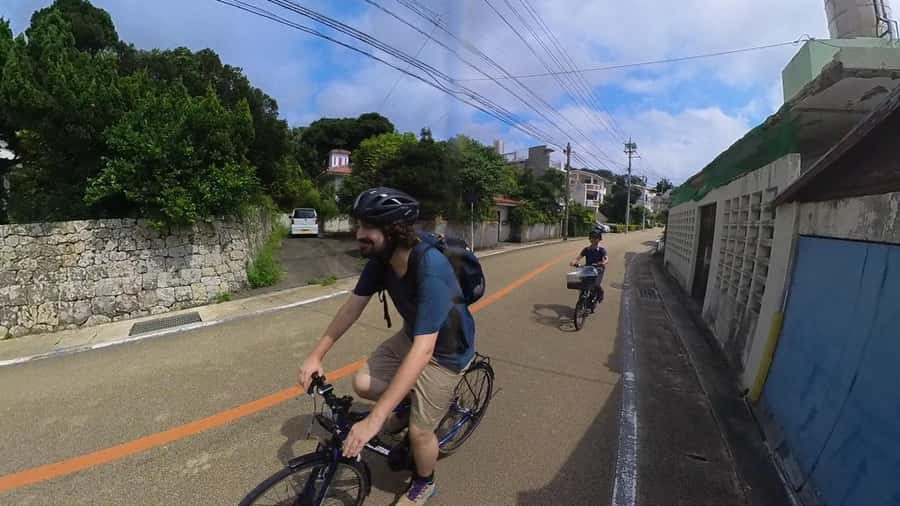
The first part of the ride follows riverside scenery where traditional and modern homes sit side by side. This is one of the tour’s best features because you are not only moving between famous sights. You are seeing the setting where daily life continues around old water routes.
The guide can point out the relationship between the rivers and springs and local communities. You may see residents going about ordinary routines, and a simple greeting can bring a smile in return. It is a modest moment, but it helps the ride feel connected to Naha rather than staged for sightseeing.
The electric bicycle works well for this kind of route. You still pedal, so you remain aware of the air, sounds, and street layout, but the motor reduces strain when the road tilts upward. That makes the three-hour schedule realistic for many visitors who would not choose a fully manual bicycle tour.
The tradeoff is that city cycling requires attention. You should be comfortable steering, stopping, and following directions around changing surfaces. Anyone who cannot ride a bike should not book this activity.
Stone Steps, Waterfalls, and Quiet Springs
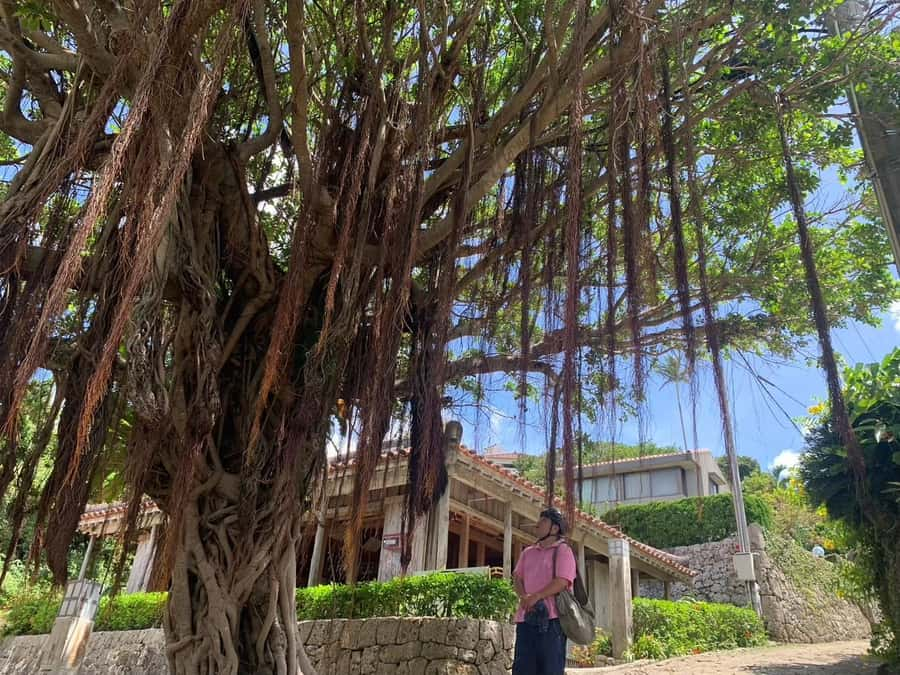
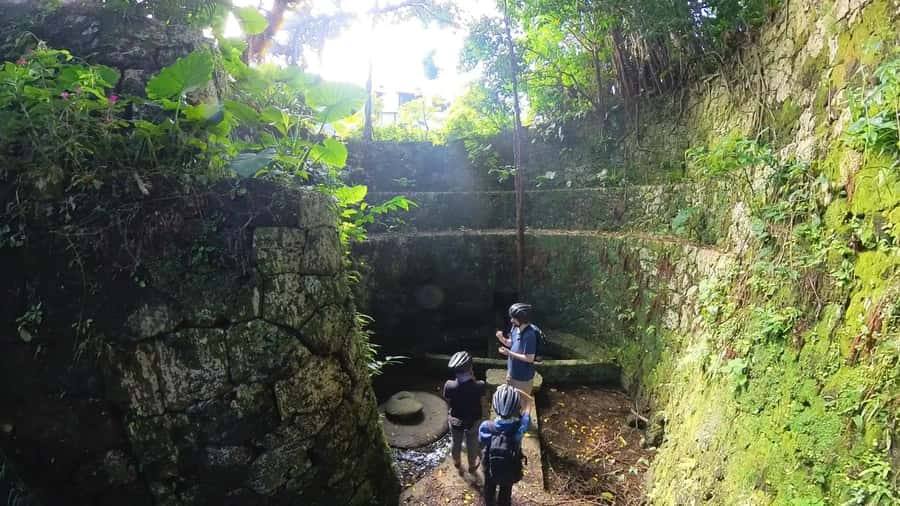
One of the most surprising sections comes just beyond the main street, where the monorail runs overhead. Ancient trees and stone steps lead away from the modern city, creating a sharp change in mood within a short distance.
At Shuri’s Sasikasa Hijya, also written as 指司笠樋川, you reach a perennial spring and the soft sound of a waterfall. The setting offers a pause from traffic and pavement. Here, the value is not a long list of facts. It is the contrast: a busy urban area above, cool water and old stone below.
You should take care on this section. The tour information specifically warns about slippery roads, rocky areas, and locations near water. Good footwear is more important than fashionable footwear, and you should expect to walk your bicycle or move carefully in parts of the route if your guide advises it.
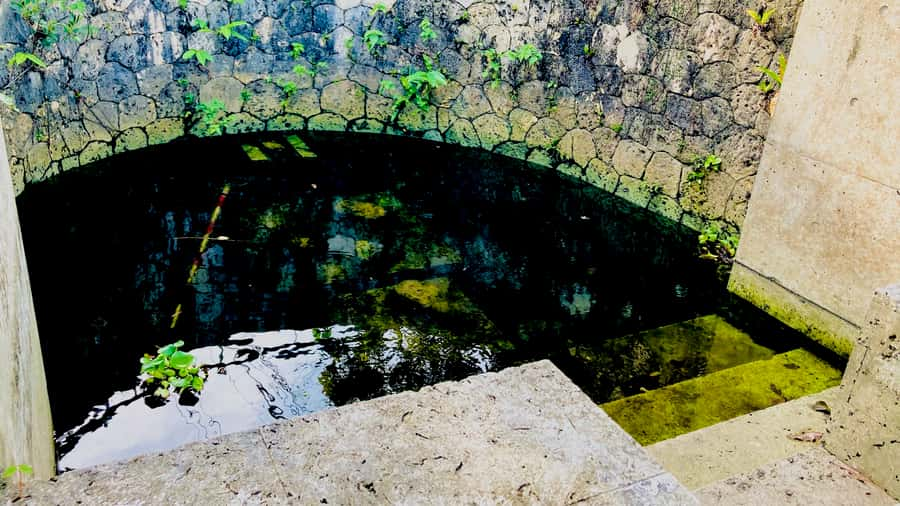
The second spring has a different character. After passing residential homes, you reach a water source where waterfowl gather from the forest. The description of the place is appealing because it is defined by small sounds: flowing water, birds, and a sense of stillness. You are not simply ticking off another sight. You are seeing why springs mattered to communities in Okinawa and why these places still offer relief from the city.
A Taste of Ryukyu Royal Court Tradition
The confectionery stop adds a useful cultural layer. At the shop, artisans preserve recipes passed down since the Ryukyu Kingdom era and make each sweet by hand. You can watch the production process, smell the sugar, and taste the finished confection.
The stop is more than a snack break. Traditional sweets were part of the hospitality offered to important visitors at the royal court. Tasting one gives you a small, direct connection to that custom, without turning the tour into a formal museum lecture.
One participant specifically praised the bakery stop, noting that the small pastries have been prepared and wrapped by hand for more than 100 years. That detail makes the visit especially appealing if you care about food traditions, craft, and family-run production.
The stop also breaks up the cycling. Three hours on a bicycle can feel long if every minute is spent moving, so this pause gives your legs a rest and gives the guide a natural moment to explain the food. If you have dietary restrictions, the supplied details do not specify ingredients or alternatives, so you should ask the provider before booking.
More Historic Bike Tours in Japan
- 5-Hour Osaka Bike Tour to the Neighborhood of Osaka Castle
★ 5.0 · 319 reviews - Historical Kyoto E-Bike Tour
★ 5.0 · 181 reviews - Half-day Himeji Castle Town Bike Tour with Lunch
★ 5.0 · 81 reviews - Kyoto: Fushimi Inari Shrine and Tofukuji Temple E-Bike Tour
★ 5.0 · 75 reviews
The Vermilion Gate and Shuri Castle
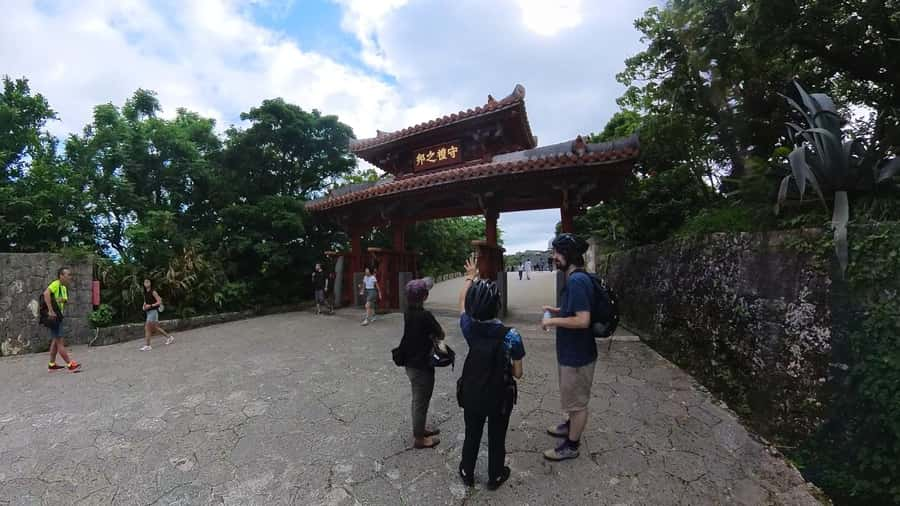
The route then reaches the famous vermilion gate associated with Shuri Castle. Its red color and balanced design make it one of Okinawa’s most recognizable sights, and the tour gives you time for commemorative photographs.
The gate was known by local people as Ue no Ayamon Ii no Ayashō, or Beautiful Gate Above. That local name helps explain why the structure matters beyond being a photo stop. It represents the old royal capital and the visual identity of Okinawa.
From here, the route climbs gradually. You can look over Naha City as red roofs, stone pillars, and guardian figures appear around you. The electric assist is most useful now. You still get the satisfaction of climbing under your own effort, but you are less likely to arrive at Shuri too tired to pay attention.
Shuri Castle served as the capital of the Ryukyu Kingdom. The tour explores its surrounding streets, cobblestones, temples, and sacred sites, giving you a broader sense of the area than a single viewpoint can provide. You will also encounter Okinawan religious traditions, not only royal architecture.
A practical point: the experience description does not promise a full indoor castle admission or a long guided visit through every castle building. Its focus is the wider Shuri area, its streets, sacred places, views, and historical setting. If your main goal is a detailed museum-style castle tour, you may want separate time for that.
The Downhill Return to Naha
After the uphill section, the ride back is mostly downhill. That change makes the final stretch easier and gives you the pleasure of coasting with the wind after the climb.
The return route leads back toward the original shop near Makishi Station. You return the bicycles there, and the formal tour ends. Since you are back in central Naha, you can continue exploring on your own afterward, which makes the timing useful for a half-day plan.
The three-hour duration is long enough to include several distinct stops without consuming an entire day. You can pair it with time around Kokusai Street, the Makishi area, or another Naha activity later. Starting times vary, so check availability when planning your day.
Weather deserves attention in Okinawa. If the chance of precipitation exceeds 70 percent or severe weather is expected, the route may change. The operator may contact you from three days before the tour through the day before with an update. A storm did not prevent one reported participant from having fun, but you should still bring a sensible attitude toward changing conditions.
Guides, Safety, and Group Feel
The strongest feedback centers on the guides. Aki was praised for polite service, riding experience, clear English, and careful support during a storm. Sally was credited with making Okinawa’s nature and history easy to understand, while Maki was described as attentive and well prepared. Jo-Jo also received a direct five-star mention.
That pattern matters because the route is not self-guided. The guide has to manage bicycles, explain history, watch road conditions, and help the group move through uneven areas. The intercom system and five-person limit support that job.
You should still judge your own fitness honestly. The electric bike reduces effort but does not remove it. You will pedal, climb, handle a bicycle in town, and walk near springs and stone steps. The tour is not suitable for wheelchair users, and it is not suitable for anyone who cannot ride.
Children aged one to five may use a child seat attached to a parent’s bicycle, but you should consult the staff first. The supplied information does not state whether older children have separate bicycles, so ask before reserving for a family group.
Is $87 a Good Value?
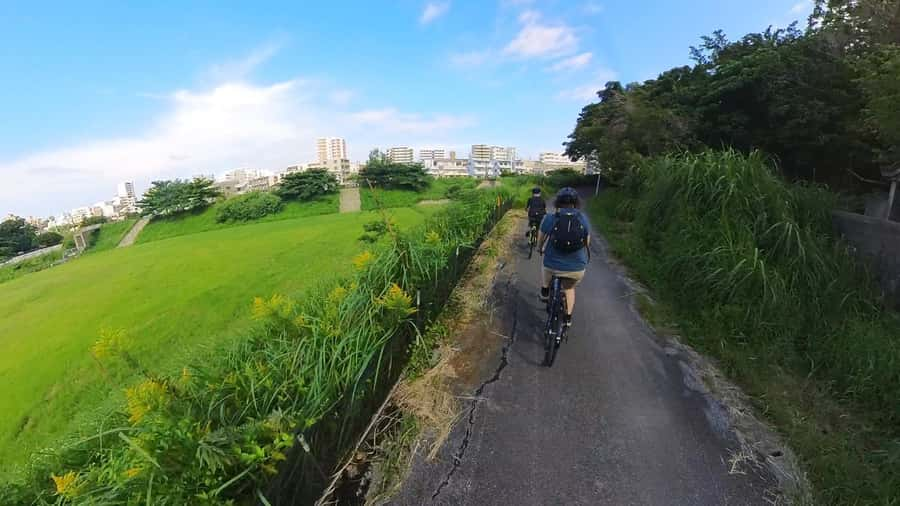
At $87 per person, the price is fair if you want several experiences combined in one outing. You are paying for three hours of electric bicycle rental, a helmet with intercom communication, a live guide, historical interpretation, spring visits, a sweet tasting and production stop, and the Shuri route.
The value is strongest for first-time visitors who want to connect Naha with Shuri without arranging transport between several scattered locations. You also avoid the tiring effort of a fully manual bicycle on the uphill section.
The price is less compelling if you only want to see Shuri Castle itself. This is not a simple castle transfer or admission ticket. You are paying for the route between the sights, the quiet springs, the local streets, and the guide’s explanations. Those details are the point of the experience.
The current rating is 4.9 from 22 reviews, and the specific praise is consistent: good bicycles, friendly guides, useful English, safety, views, and information. One person called it a good way to see the southern part of the island, while another liked getting away from the main tourist routes. Those are sensible reasons to choose it.
Who Should Book This Experience?
I would choose this tour if you want to:
- See Naha and Shuri by moving through the city rather than riding in a vehicle
- Learn about water sources, springs, and local daily life
- Visit Shuri’s historic streets and sacred sites
- Taste traditional sweets connected to Ryukyu court customs
- Travel in a group small enough for direct help from the guide
- Use an e-bike for hills while still getting active
I would be cautious if you dislike bicycles, have difficulty with uneven ground, or want a slow indoor history tour. Sandals are a poor choice, and bad weather may alter the route.
Cancellation is flexible up to 24 hours before departure for a full refund, and you can reserve now and pay later. That helps if your Naha schedule is still shifting, though the weather plan can still affect the route.
My Recommendation
I recommend this tour for an active half-day in Naha, especially if you have already seen the main shopping streets and want something more local in feel. The best parts are the unexpected springs, the handmade sweets, the climb through Shuri, and the steady help from guides such as Aki, Sally, Maki, and Jo-Jo.
Book it if you want history connected to streets, water, food, and ordinary homes. Skip it if you need step-free access, cannot ride, or want a full castle-only visit. For most confident cyclists who bring proper shoes and accept a little weather risk, $87 buys a thoughtful route with far more character than a simple ride between tourist sights.
FAQ
Where does the cycling tour begin?
It begins at the e-charity Naha Kokusai-dori main shop near Makishi Monorail Station, next to Makishi Post Office. The shop is about a one-minute walk from the station.
How long does the tour last?
The tour lasts three hours. Starting times depend on availability.
What is included in the price?
The price includes a guided tour, helmet with an intercom system, and an electric-assist bicycle rental.
Are camera mounts or phone holders provided?
No. Camera mounts and mobile phone holders are not included.
Which languages are available?
The tour is offered in English and Japanese.
How many people can join the group?
The group is limited to five participants.
Do I need to be able to ride a bicycle?
Yes. The experience is not suitable for people who cannot ride a bike. The electric assistance helps with pedaling but does not replace bicycle handling.
What should I wear?
Wear comfortable athletic shoes or similar footwear. Avoid high heels and sandals because parts of the route can be slippery and may include rocky areas near water.
Can young children join?
Children aged one to five may have a child seat attached to a parent’s bicycle. You should consult the staff for details before booking.
More History Tours in Japan
- Nara: Bike Tour in Ancient Capital UNESCO World Heritage
★ 5.0 · 43 reviews - 4.5-hr Kyoto Historical Highlights Bike Tour with UNESCO
★ 4.7 · 13 reviews - Historical Singapore Bike Tour on Full-Sized Bicycles
★ 5.0 · 1,421 reviews - Barcelona: 2.5-Hour Bike or E-Bike Historical Tour
★ 4.5 · 1,262 reviews
Newly added rides around Japan
- Private E-MTB guided cycling around Mt. Aso volcano & grasslands★ 5.0 · 16 reviews
- Tokyo: Private Cycling Tour with cute E-bike★ 5.0 · 11 reviews
- Tokyo Bay Area: Sunset Night View 3h E-bike Guided Bike Tour★ 5.0 · 11 reviews
- Tokyo: West-Side Cycling and Food Tour with Guide★ 5.0 · 37 reviews
- Tokyo: 3h Private E-bike Tours, Starting at Your Hotel★ 5.0 · 36 reviews
- Tokyo: 3-hour Guided E-Bike Tour of the City’s Hidden Gems★ 4.8 · 251 reviews
- Tokyo Bike Tour: Shibuya, Harajuku & Hidden Gems★ 5.0 · 20 reviews
- Tokyo: Hidden Gems Guided Bike Tour with Lunch★ 4.5 · 30 reviews
Japan Bike Tours, compared.




3h Tokyo E-Bike Tour: Hidden Gems, and Local Life with guide
Read our review →
Arashiyama Bamboo Forest & Hidden Gems Bike Tour (Early Bird)
Read our review →
Hiroshima in a Nutshell: Morning Bike Adventure
Read our review →Browse the lists this tour appears in